SIGGRAPH 2026: NVIDIA Agent Toolkit Adds Omniverse Libraries for Simulation-Ready 3D
SIGGRAPH 2026: NVIDIA Agent Toolkit Adds Omniverse Libraries for Simulation-Ready 3D
Current Observation / 現況觀察
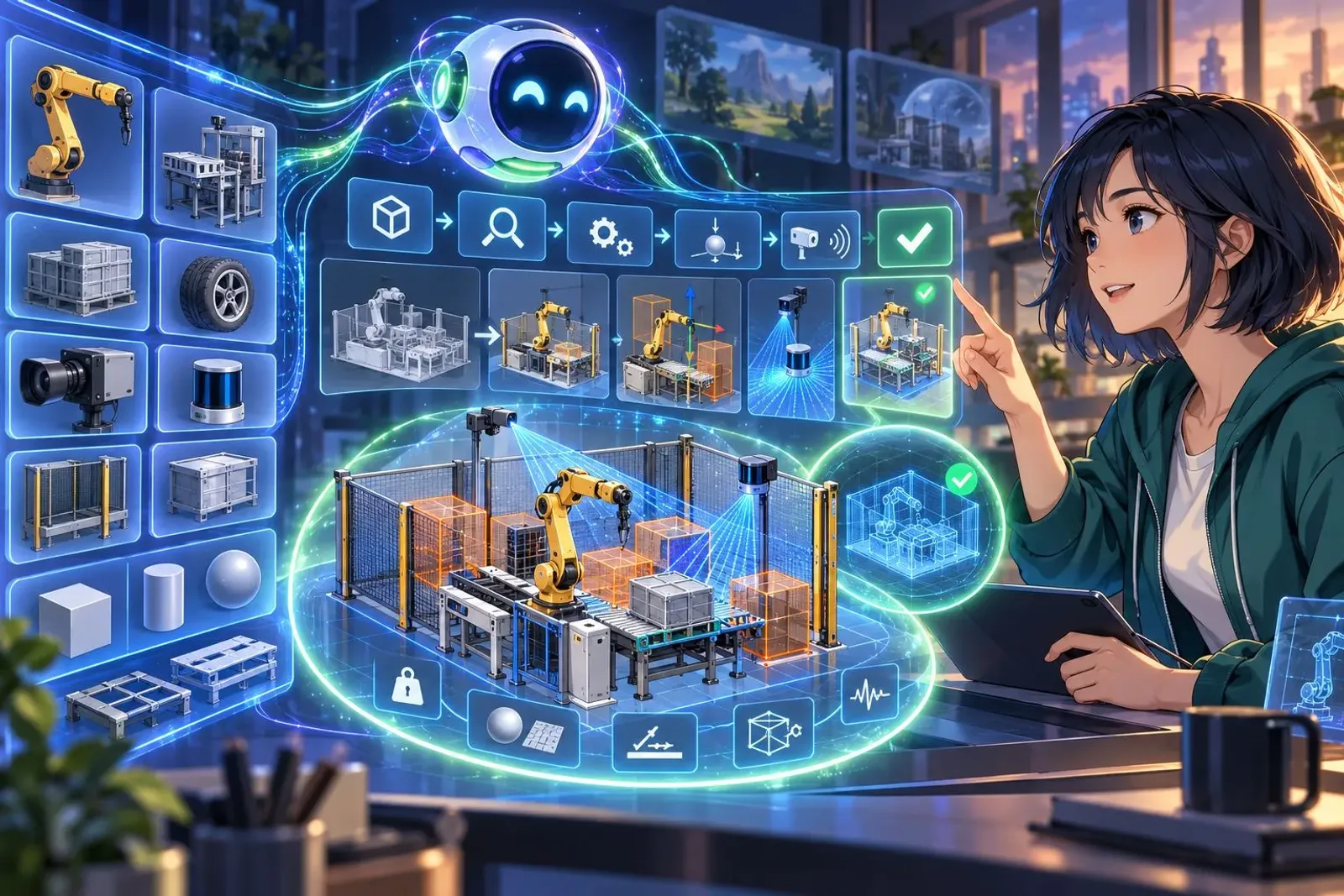
On July 20, 2026 at SIGGRAPH, NVIDIA announced that NVIDIA Agent Toolkit now includes a set of Omniverse libraries so AI agents can do more pipeline-shaped work inside existing 3D apps: inspect scenes, flag issues, attach simulation properties, and push content toward simulation-ready states.
The company also pointed to GitHub-available library capabilities, including:
ovrtxfor camera, lidar, radar and other sensor outputs from 3D scenesovphysxfor GPU-accelerated physics (collisions, mass, friction, motion)- CAD-to-SimReady skills that convert CAD into OpenUSD-based simulation-ready assets
There is also a Blender integration blueprint (the SimReady Blender sample flow) showing how sensor simulation, physics and validation can be added without removing creators from final control.
For indie and open-toolchain readers, the useful takeaway is not “AI paints prettier,” but “can AI help make a scene testable and simulatable?”
Background Analysis / 背景分析
Recent AI×3D headlines often stop at generation: meshes, textures, video. Agent Toolkit + Omniverse libraries take a different cut — they assume 3D content already lives in familiar DCC/CAD workflows, and what is missing are structure, materials, scale, labels, sensors and physical properties needed to train or test robots, factories and autonomous systems.
Pair this with the Astra “operate Blender UI” story:
- Astra demo: an external model treats Blender/Unreal as operable environments
- Agent Toolkit path: callable tools and skills (libraries/skills/MCP) are wired into agent workflows so software vendors and studios can attach agents onto apps they already ship
SIGGRAPH coverage also stressed Model Context Protocol (MCP): Blender, Unreal Editor, Houdini, Nuke/Silhouette, Adobe and others are making project state reachable by agents. Agent Toolkit itself supports MCP client/server roles — moving from “faster compute” toward “actionable assistants.”
For open toolchains, the Blender blueprint and open libraries matter more than the hardware trailer: learn the interface first, then decide whether local large systems (such as DGX Station) or cloud stacks are worth it.
Impact Assessment / 影響評估
For game / real-time art: This does not instantly mean better character texturing, but it can change how testable environment assets are — missing textures, unit mistakes, bad collision setups are chores agents may sweep first. Humans still own art direction and approvals.
For technical artists / pipelines: Closer to the home topic. SimReady, OpenUSD, sensors and physics properties already burn time; if agents can stably check and convert, TDs shift toward rule design and exception handling.
For independents: The barrier remains. Open libraries do not mean a laptop runs a full physical AI stack. NVIDIA’s local-agent narrative often pairs with higher-end workstations. The practical move is to track Blender/MCP “tools become callable,” not to buy a rack first.
Future Outlook / 未來展望
Three follow-ups matter:
- Whether the Blender blueprint becomes reproducible teaching-grade samples, not only a booth demo
- Whether open / mid-size pipelines can use these skills without locking to one cloud
- Whether review and rollback are designed into the workflow when agents fail (otherwise you just manufacture bad assets faster)
If those mature, more 3D work becomes “set rules, review outputs, converge quality.” If not, this wave stays mostly in industrial simulation and large-studio pipelines.
Personal Perspective / 個人觀點
The value of this SIGGRAPH news is that it pulls talk from “looks good” back to “can the system trust this content.” Game artists may not run lidar every day, but clean, handoff-ready, checkable assets hurt open indie teams too.
Astra shows AI starting to press software buttons. Agent Toolkit asks whether software handed AI the right wrenches. Both still need humans as the quality gate — the wrench shapes just differ.
Conclusion / 結論
At SIGGRAPH 2026, NVIDIA connected Omniverse libraries into Agent Toolkit and published a Blender integration blueprint — another step toward simulation-ready, callable tooling with creators still in control. For Halabaojia readers, prioritize the open libraries and Blender/MCP path; follow hardware and full physical AI stacks only once reproducible workflows exist.