Blender Studio's Overgrown: Open Source Animation Takes Aim at Feature Film Production
Blender Studio’s Overgrown: Open Source Animation Takes Aim at Feature Film Production
Current Observation
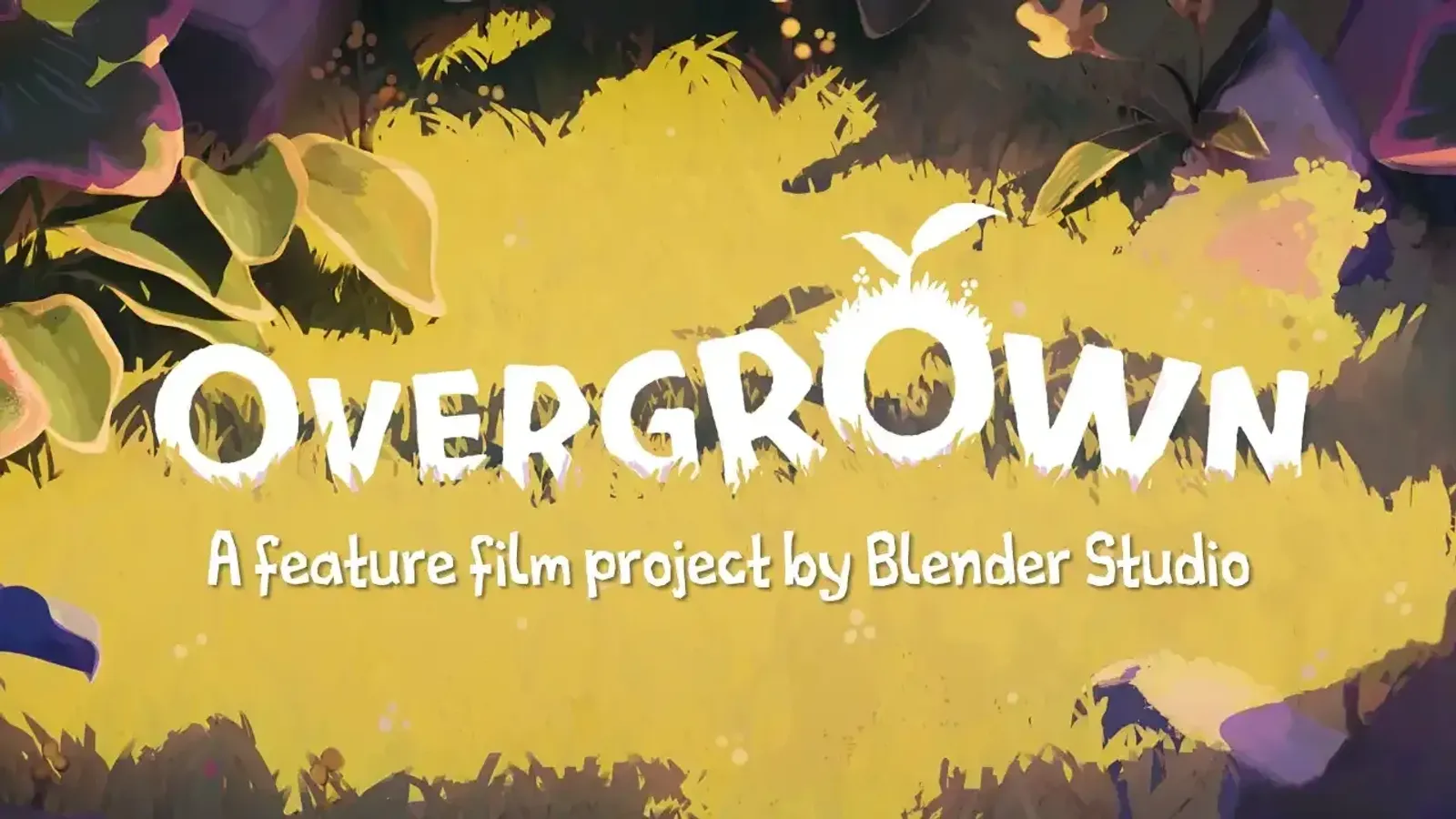
Blender Studio recently revealed Overgrown, a project aimed at developing a feature-length animated film. According to Creative Bloq’s July 8, 2026 report, this is an important attempt for Blender Studio to move from short open movies into long-form production. The goal is not only to finish a film. The larger idea is to make the production process, documentation, pipeline tools, and lessons as open as possible so other animation creators can learn from them.
Overgrown is currently framed as a post-human, mechanical apocalypse world reclaimed by nature. The report says the film will be co-directed by Hjalti Hjálmarsson and Rik Schutte, with a story centered on a group of characters surviving and growing in a ruined world. Based on the public direction so far, the project is not simply a Blender rendering showcase. It is trying to prove that open source tools can support animation storytelling at a larger scale.
This matters because many previous Blender open movies were short films, experiments, or tool validation projects. If Overgrown moves forward, it means Blender Studio is trying to turn open source short-film learning material into a practical reference for feature animation production.

Background Analysis
Blender Studio has produced several open movies over the years, including Elephants Dream, Big Buck Bunny, Sintel, Tears of Steel, Spring, and Sprite Fright. The value of those projects is not limited to the films themselves. They also feed production files, assets, technical problems, and software requirements back into the Blender ecosystem.
In other words, Blender open movies have never been simple promotional videos. They work more like production stress tests. Artists encounter tool limitations in real projects, and developers can turn those needs into new features or workflow improvements. That feedback loop is one reason Blender has stayed closely connected to real production needs.
Overgrown pushes that model into a much harder space. A feature-length animated film needs longer shot management, more stable asset versions, more complex character and environment continuity, and review workflows that can survive collaboration. A short film can often be completed through an intense sprint by a small team. A feature needs a pipeline that is more repeatable, transferable, and maintainable.
That is why the most important question is not whether Blender can make beautiful images. The more interesting question is whether Blender Studio can break feature animation production into an open method that other creators can study, copy, adapt, and maintain.

Impact Assessment
For individual creators, Overgrown could offer direct learning value. Many people learning Blender run into the same wall: they can follow tutorials for a single model, a single image, or a short clip, but once they enter a complete project, they may not know how to organize folders, name assets, version shots, or maintain character rigs. If Blender Studio documents a feature pipeline, those problems could have much clearer references.
For small animation teams, this could become a production template that can be broken down and reused. Not every team needs to make a feature film, but the same pipeline ideas around asset management, review, scene breakdowns, lighting templates, render settings, and release cadence can be scaled down for short films, game trailers, educational animation, or branded content.
For the Blender ecosystem, this is also a practical stress test. Feature animation exposes problems that short films may not reveal, such as performance across many shots, version conflicts in collaboration, consistency in character acting, data exchange, and render scheduling. If those pain points are turned into tools and documentation, the benefit goes beyond one film and reaches the wider open source 3D community.
Funding Model
The funding model is another important part of this project. Creative Bloq reports that Blender Studio hopes to use member subscriptions to fund early development, with a goal of reaching 7,000 subscribers by the end of September 2026. That early support would go toward visual development, software work, and pipeline building. The resulting materials would then help the team seek outside production or distribution partners for the larger production budget.
This can be understood as a 20/80 structure. The community helps fund the most open-source-relevant early stage, including development, research, documentation, and tools. The much larger cost of full feature production would then be supported through external funding. That is different from traditional film production because the community is not only buying a ticket or waiting for a finished result. It is helping build the public production foundation from the beginning.
The risks are clear too. If subscriptions fall short, the project may not reach the next stage. If external funding comes with conditions that conflict with open sharing, Blender Studio will need to maintain a careful balance. That is why this news is worth tracking beyond the initial announcement.
Future Outlook
If Overgrown moves forward successfully, it could become an important milestone for the Blender ecosystem. Blender has already proven itself in short films, game assets, advertising, visualization, and independent animation. The bigger question now is whether it can also make the organizational side of feature animation public.
For the animation industry, this will not immediately replace large traditional studios, and it does not need to. The more practical meaning is that small teams, schools, independent directors, and boutique studios may eventually have a more complete reference workflow instead of starting from nothing when building project management and production pipelines.
This also fits a broader shift in visual creation. AI tools are multiplying, and content output is increasing, but what remains scarce is sustainable production workflow, strong art direction, and stable team collaboration. If Overgrown can make those methods visible, its long-term value may be greater than a simple feature showcase.
Practical Application
If you use Blender, this news can translate into three practical actions.
First, start organizing your own project folders. Avoid keeping models, textures, renders, and references mixed in the same level. Build a clearer structure with folders such as assets, shots, renders, textures, and references.
Second, use small projects to test a complete pipeline. Instead of starting with a huge work, make a 10-second animation and run the entire process once: concept sketch, modeling, materials, animation, lighting, compositing, and final output. That is much closer to real production than learning isolated features.
Third, keep following Blender Studio updates. If Overgrown later publishes documents, assets, or tools, the most important thing to study will not only be how good the final image looks. Look at how the team names files, splits work, reviews shots, manages versions, and solves bottlenecks.
Personal Perspective
The most important signal from Overgrown is that Blender Studio is extending open source software into open source production knowledge. Free software matters, but for creators, the harder part is understanding how complete works are organized and delivered.
Many people learning 3D stop at the tool level. They can model, shade, and light, but they do not know how to connect those skills into a production workflow that can actually be delivered. If Overgrown makes the structure of feature animation visible, its value will not be only the film itself. It could become a long-term production textbook.
Conclusion
Blender Studio’s Overgrown is an open source animation story worth following. Its ambition is not just to make a feature-length film, but to build a feature animation method that can be studied, modified, and reused.
For Blender users, game artists, animators, and small studios, the point is not simply waiting for the film to be released. The real value is watching how a large production is broken into workflows, documentation, and tools. Those public lessons may end up having more influence than the single finished film.
Related Resources:
-
Blender Studio Overgrown official project page
- Follow official project information and future production updates from Blender Studio
-
Creative Bloq: Blender wants to make its first feature-length movie and share the process for free
- July 8, 2026 report covering Overgrown’s positioning, funding model, and open production goals
-
Blender Studio Open Movies
- Review past Blender Studio open movies and public production resources
-
Blender official website
- Download Blender and follow the latest development of the open source 3D tool
Tags: #Blender #Overgrown #BlenderStudio #OpenSourceAnimation #AnimationProduction #3DWorkflow