Blender 5.0 Major Update: Open-Source 3D Creation Tool Enters New Era
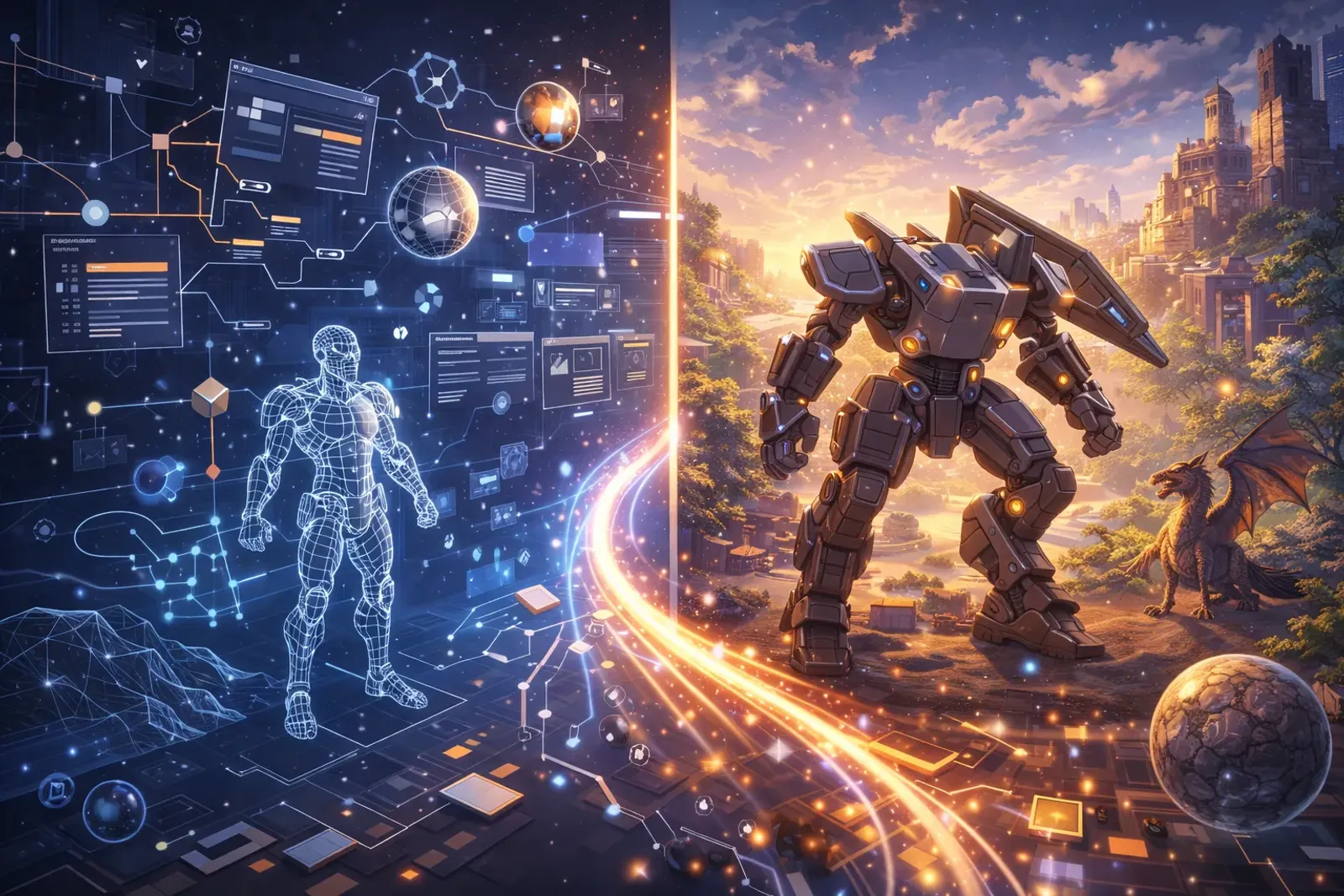
Blender 5.0 Major Update: Open-Source 3D Creation Tool Enters New Era
Phenomenon Observation
In January 2026, the Blender Foundation officially released Blender 5.0, marking the most significant milestone update since version 2.8. Unlike previous minor version iterations, 5.0 skipped 4.5 entirely, using a new major version number to herald the arrival of a new era.
This update has garnered intense attention from the entire 3D creation community. From indie game developers to professional animation studios, from architectural visualization experts to concept artists, everyone is discussing the revolutionary changes this update brings. The official release page saw record-breaking traffic on launch day, and community forums and social media are filled with tests and reviews of the new features.

Background Analysis
To understand Blender 5.0’s significance, we must first review Blender’s development history. Since Blender 2.8 rewrote the user interface and introduced the Eevee real-time rendering engine in 2019, Blender has undergone seven years of continuous improvement. During these seven years, Blender evolved from a “free but limited” tool into a professional-grade 3D creation platform capable of challenging commercial software.
Strategic Thinking Behind Version Evolution
Blender’s version naming strategy has been quite conservative. From 4.0 to 4.4, each minor version focused on stability and incremental improvements. But 5.0’s emergence breaks this convention, driven by several key factors:
- Technical Accumulation Reaching Critical Mass: Years of accumulated underlying architecture improvements finally explode collectively in version 5.0
- Intensifying Competition: Game engines like Unity and Unreal Engine continuously strengthen 3D creation tools; Blender needs stronger market positioning
- Maturing Open-Source Community: More professional studios and large enterprises join the Blender ecosystem, providing funding and development resources
Core Update Areas
Blender 5.0’s updates focus on several key areas:
EEVEE Real-Time Rendering Engine Upgrade EEVEE is Blender’s real-time rendering engine, equivalent to scene preview systems in game engines. Version 5.0 deeply restructures EEVEE, improving lighting calculation accuracy and performance. The new global illumination system makes real-time previews closer to final render quality, dramatically shortening creators’ iterative trial-and-error time.
Compositor Performance Revolution The compositor is a core post-production tool for combining multiple render layers into final images. Version 5.0 adopts a new node execution architecture, with multi-threaded performance improvements up to 300%. This means complex post-production workflows no longer require long waits—creators can see adjustment effects in real-time.
Grease Pencil Workflow Optimization Grease Pencil is Blender’s 2D animation and drawing tool. Version 5.0 dramatically improves the brush engine and layer management system. New stroke interpolation algorithms make hand-drawn animation smoother while supporting more complex 2D-3D hybrid workflows.
Video Sequencer Enhancement Video editing improvements bring Blender closer to a complete creation suite. The new version supports more codecs, optimizes timeline operations, and improves audio synchronization issues.
Modeling and UV Workflow Improvements Modeling tools gain new modifiers and smarter topology tools. UV unwrapping algorithms are optimized, automatically handling complex geometry more effectively.

Impact Assessment
Impact on Different Creator Groups
Game Asset Creators For game artists, EEVEE’s upgrade is highly significant. Real-time rendering engine improvements allow more accurate preview of how assets will appear in game engines. This reduces “looks great in Blender preview but poor in-game” situations.
Animation Production Teams Grease Pencil optimization is a boon for 2D animators. Many indie animation studios have already begun using Blender to produce complete animated works; 5.0’s improvements will accelerate this trend. Meanwhile, compositor performance improvements mean post-production is no longer a bottleneck.
Architectural Visualization Experts Real-time rendering quality improvements allow architectural visualization to quickly present different design proposals to clients. This is especially important in projects requiring rapid iteration.
Education Sector Blender has always been the preferred tool for 3D creation education because it’s completely free yet fully featured. The 5.0 update lets students learn workflows closer to industry standards, narrowing the gap between learning curves and practical application.
Impact on Open-Source Ecosystem
Blender 5.0’s success proves the viability of the open-source model in professional creative tool domains. This may inspire more open-source projects toward professionalization and attract more corporate investment in open-source software.
From a business perspective, Blender’s progress pressures traditional 3D software vendors. Although Maya, 3ds Max, and other commercial software maintain advantages in specific areas, Blender’s feature gap is rapidly closing. This forces commercial software vendors to accelerate innovation, ultimately benefiting the entire creator community.
Future Outlook
Technology Development Trends
Blender 5.0 reveals several future development directions:
Deepening AI Integration While 5.0 doesn’t heavily feature AI functionality yet, the community is already discussing integrating machine learning into various workflows. The future may see AI-assisted modeling, automatic UV unwrapping, intelligent material generation, and more.
Real-Time Collaboration As remote work becomes the norm, real-time collaboration features will become priorities. The Blender Foundation is already exploring the possibility of multiple users simultaneously editing scenes.
Cross-Platform Optimization Web-based Blender, mobile versions, and other developments may become future focus areas, allowing creators to engage in 3D creation anytime, anywhere.
Industry Impact Predictions
In coming years, we may see:
- More Studios Adopting Blender: Cases of large projects using Blender will continue increasing
- Plugin Ecosystem Flourishing: Third-party developers will create more professional plugins and tools
- Educational Resource Explosion: Online courses and teaching resources will dramatically grow
- Strengthened Corporate Support: More companies will sponsor Blender development or employ dedicated developers
Practical Applications
Immediately Available Improvements
For existing Blender users, version 5.0’s upgrade value primarily manifests in:
Workflow Efficiency Improvements Compositor performance improvements directly translate to time savings. A composite tree that previously required 30 seconds to calculate may now only need 10 seconds. In situations requiring repeated adjustments, cumulative effects are highly significant.
Creative Quality Enhancement EEVEE lighting improvements make previews closer to final effects, reducing “preview looks good but problems discovered after rendering” situations. This lowers rework rates and improves work quality.
Learning Curve Optimization Many tools have improved logic, making them easier for beginners to grasp. This is good news for those wanting to learn 3D creation.
Migration Recommendations
For creators considering migrating from other software to Blender:
- Assess Workflow Compatibility: Check whether key functions in existing workflows have corresponding solutions in Blender
- Utilize Transition Periods: Start using Blender on smaller projects, gradually familiarizing with operations
- Leverage Community Resources: The Blender community is very active; problems are easy to solve
- Consider Plugin Support: Some professional functions may require plugins to implement
Personal Perspective
As a long-time observer of 3D creation tool development, I believe Blender 5.0 represents not just software feature improvements but the victory of open-source ideals in professional domains.
The Power of Open Source Blender proves open-source software needn’t be “free but feature-poor” choices. Through hybrid models of community-driven development and corporate sponsorship, open-source projects can match or exceed commercial software standards. This provides valuable experience for open-source projects in other fields.
Democratization of Creative Tools Blender’s free nature lowers barriers to 3D creation. A creative individual or small team lacking funds can now use the same level of tools as large studios. This democratization trend will unleash more creativity; we may see more stunning independent works.
Sustainable Development Model The development fund system established by the Blender Foundation allows software to continuously evolve without being affected by short-term commercial interest fluctuations. This model is worth referencing for other open-source projects.
Challenges Remain Despite significant progress, Blender still has room for improvement in certain professional areas. For example, in character animation and large scene management, gaps with professional software like Maya remain. But given Blender’s development speed, these gaps are rapidly closing.
Conclusion
Blender 5.0 isn’t just a version update—it’s a milestone marking open-source 3D creation tools truly entering the mainstream of professional domains.
For creators, this update brings not only more powerful features and better performance but also more possibilities. Whether you’re a beginner just starting to learn 3D creation or an experienced professional, Blender 5.0 is worth your time to explore.
For the entire 3D creation industry, Blender’s success pushes the entire market forward. It forces commercial software vendors to provide better value propositions while creating fairer competitive environments for small studios and independent creators.
The future of open-source software is full of hope, and Blender 5.0 is the best proof of that hope.
Related Resources:
Official Resources
-
Blender Official Website
-
Blender 5.0 Download Page
-
Blender 5.0 Complete Release Notes
-
Blender Official Documentation
Learning Resources
-
Blender Guru Official Channel
- Most popular Blender tutorial channel
-
CG Cookie
- Professional Blender course platform
-
Blender Artists Forum
- Official community forum
Community and Support
-
Blender Stack Exchange
- Q&A platform
-
r/blender
- Reddit community
-
Blender Development Fund
- Support Blender development