3D Printing Saves Lives: When Technology Becomes a Medical Miracle
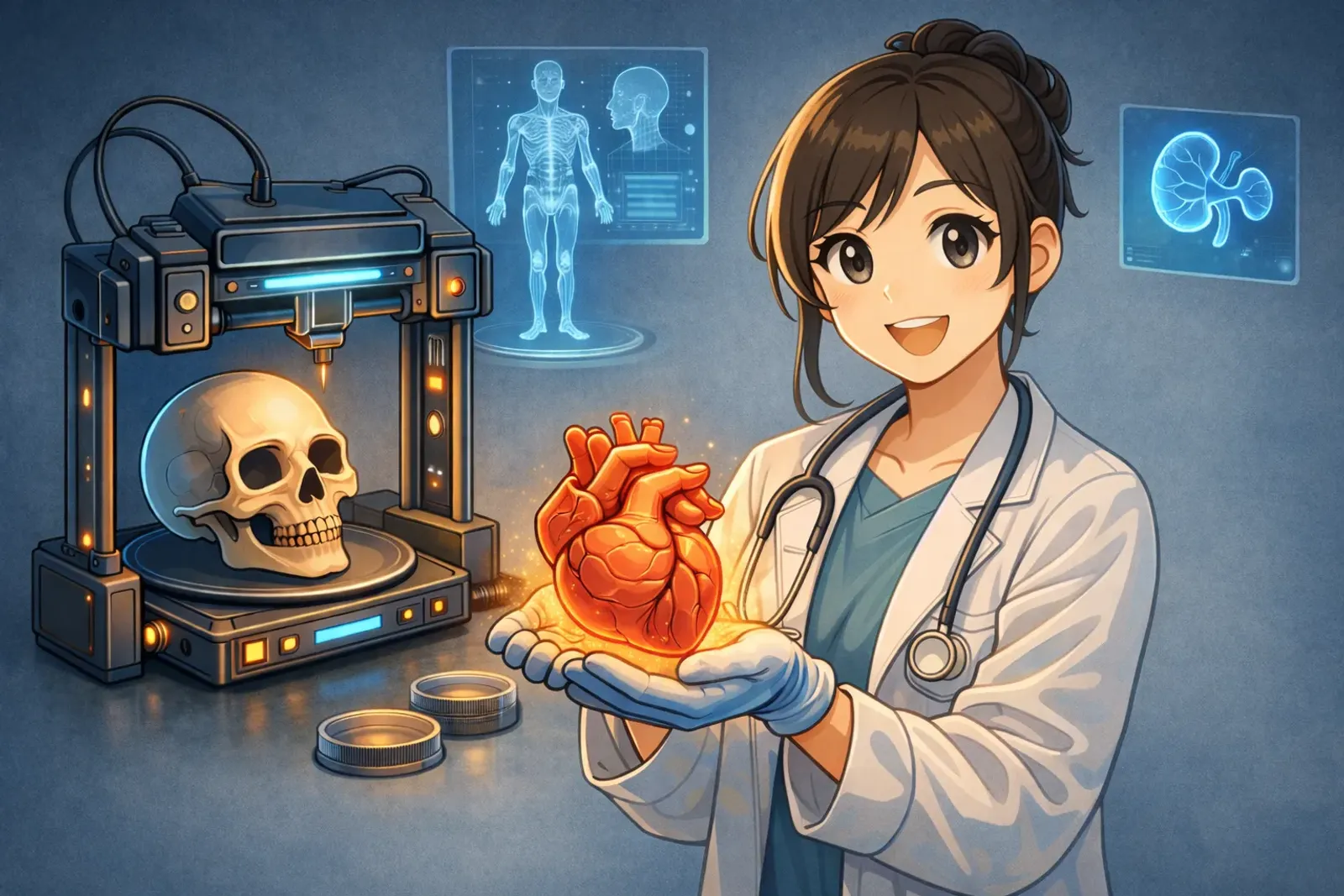
The Perfect Fusion of Technology and Medicine
When a gunshot victim whose face was “beyond recognition” gains a new life with the help of 3D printing technology, it’s not just a medical victory—it’s the most moving testament to technology benefiting humanity. 3D printing technology is rewriting medical possibilities, transforming what once existed only in science fiction into real tools for saving lives and rebuilding hope.
Taiwan Breakthrough: From Beyond Recognition to Social Reintegration
In 2025, Tri-Service General Hospital completed an extremely complex craniofacial reconstruction surgery. The patient suffered facial bone fragmentation, airway obstruction, and brain exposure from a gunshot wound. The medical team utilized 3D printing technology:
- Preoperative precision planning: 3D printed models simulating bone structure, virtual reconstruction for surgical path planning
- Intraoperative precision execution: Precise cutting according to 3D templates, planning fibula transplant angles, shortening adjustment time
- Natural postoperative results: Combined with “facial golden ratio” to design implants, reconstructing appearance and occlusion function
Result: Patient successfully returned to society one year post-surgery, recovering respiratory, feeding, and appearance functions.

Global Medical Miracle Cases
Netherlands: First Complete Skull Transplant
In 2014, UMC Utrecht completed the world’s first complete 3D printed skull transplant. A 22-year-old female with rare skull thickening condition experienced continuous skull growth compressing the brain, causing vision loss and headaches. The medical team printed a complete skull using polymer materials that perfectly fit the patient’s head contour. After 23 hours of surgery, the patient fully recovered, regained vision and quality of life, with normal appearance.
Significance: First use of 3D printing technology for large-scale bone replacement, opening a new chapter for global medicine.
USA: Functional Heart Valves
University of Minnesota successfully 3D printed functional heart valves in 2019. Made using patient’s own cells with extremely high biocompatibility, operating naturally with heartbeat. This technology avoids rejection reactions, eliminates lifelong anti-rejection medication, allows pediatric valves to adjust with growth, and significantly reduces multiple surgery risks.
China: New Era in Spinal Implants
Peking University Third Hospital implanted a 3D printed titanium spine in a 12-year-old boy in 2014. The patient had chordoma with the tumor at the cervical-thoracic junction, requiring removal of 5 vertebrae. The medical team designed customized implants from CT scan data, including artificial intervertebral discs and facets. The patient recovered well, preserved spinal mobility, pioneering a new era in spinal reconstruction.

Technical Advantages: Why 3D Printing Changes Everything
Customized Precision Medicine
Traditional standardized implants are difficult to fit perfectly, requiring extensive intraoperative adjustments that increase surgery time and risks. 3D printing designs from patient CT/MRI data, 100% matching individual anatomical structure, with preoperative virtual simulation predicting potential problems. Taiwan cases show surgery time reduced by 30-40%, significantly lowering anesthesia risks and complications.
Lower Medical Costs
While sounding expensive, it’s more economical long-term. Reduced surgery time lowers operating room costs, precise implantation reduces revision opportunities, and shortened hospital stays reduce complication treatment costs. US studies show: 3D printing saves 20-30% overall medical costs, with patient recovery time shortened 40-50%.
Improved Surgical Success Rates
Data shows traditional complex bone reconstruction has 60-75% success rates with 20-30% complication rates. 3D printing-assisted surgery achieves 85-95% success rates, 5-10% complication rates, and reduces second surgery needs from 15-25% to under 5%.
Application Areas and Future Outlook
Orthopedics (Most Mature)
Cranial, jaw, spinal, and joint implants are clinically applied, benefiting hundreds of thousands of patients globally annually, especially beneficial for complex fractures and post-tumor resection reconstruction.
Cardiovascular (Rapid Development)
Heart valves and vascular stents are in clinical trial stages. With 17 million cardiovascular disease deaths globally annually, 3D technology can reduce surgical risks and provide more treatment options.
Organ Transplantation (Future Direction)
Liver tissue, kidney tissue, skin, and corneas are actively researched. Expert prediction: Simple organ 3D printing transplantation possible within 10-15 years, solving the global organ shortage problem affecting millions, with zero rejection using autologous cells.
Key Technology Analysis
Biomaterial Science
- Metal materials: Titanium alloy for bone implants with high strength and good biocompatibility
- Biopolymers: PCL, PLA degradable materials for soft tissue repair
- Bioinks: Cell-laden hydrogels that can culture into real tissue
Precision Printing Technology
- SLA (Stereolithography): ±0.1mm accuracy, suitable for precision bone implants
- SLS (Selective Laser Sintering): ±0.3mm accuracy, suitable for porous structures and load-bearing implants
- Bioprinting: Uses cell-laden “bioink” for layer-by-layer tissue printing
Revolutionary Impact on Healthcare Systems
Education and Training
3D printed human body models used for anatomy learning and surgical training. Johns Hopkins Hospital research shows: resident surgeons trained with 3D models reduce surgery time by 25% and error rates by 40%.
Telemedicine Support
Remote area hospitals perform CT scans, transmit data to medical centers, expert teams design implants, 3D print and ship locally, with remote surgical guidance. Benefiting regions include remote rural areas, developing countries, and conflict zones.
Emergency Medical Response
During COVID-19, Italian hospitals 3D printed ventilator valves, saving dozens of lives in 48 hours, reducing costs from €10,000 to €1.
Reducing Healthcare Inequality
Equality of 3D technology: Desktop 3D printers cost only $1,000-5,000, open-source software is free, single implant material costs only $100-500. Design files can be digitally transmitted, with online training courses and global expert network support.
Real cases:
- Uganda project: Non-profits provided 3D printers, trained local medical staff, produced prosthetics for amputees, reducing costs from $5,000 to $50
- India innovation: Local companies developed low-cost 3D printers focused on orthopedic implants, with prices only 1/10 of imports
Future Development Trends
Bioprinted Organs (2025-2030)

Short-term goals include functional skin, cartilage tissue, and simple vascular structures. Mid-term goals are liver tissue segments, kidney filtration units, and heart valves. Breakthrough keys are vascular network establishment and tissue functional maturation.
AI-Assisted Design (2026-2028)
AI analyzes millions of surgical data, automatically generates optimal implant designs, and predicts surgical risks. Design time reduced from hours to minutes, with more optimized structural design and reduced human errors.
4D Printing Technology (2028-2035)
Implants can change shape over time, responding to environmental stimuli (temperature, humidity, pH). Applications include pediatric implants adjusting with growth, vascular stents auto-expanding, and smart drug delivery systems.
Ethical and Regulatory Challenges
Quality Control
How to ensure consistent quality for each printed product? Who certifies 3D printed medical devices? Liability when problems occur? Global standards being established: US FDA approval process, EU CE certification, ISO 13485 medical device quality management.
Data Privacy and Security
Potential risks include patient CT/MRI data leaks, 3D design file theft, and counterfeit implants. Protection measures include data encryption, blockchain tracking, and strict access control.
Cost and Equity
Ensure technology doesn’t become exclusive to the wealthy, health insurance reimbursement policies, and accessibility in developing countries. Solution directions include open-source designs and technology, government subsidy programs, and international medical aid.
Conclusion: An Era When Technology Changes Lives
3D printing medical technology represents the combination of human intelligence and empathy. From Tri-Service General Hospital’s craniofacial reconstruction in Taiwan to complete skull transplants in the Netherlands, from heart valves in the US to spinal implants in China—these cases tell one story:
When technology centers on humanity, miracles happen.
In the next 10 years, we will witness more “impossibles” becoming “possibles”, more patients gaining new lives, and healthcare becoming more precise, accessible, and humane. This is not just medical progress—it’s a leap forward for human civilization. 3D printing technology makes us believe: the ultimate purpose of technology is to help every life live better.
Related Resources: