MECCHA CHAMELEON: The Viral Hide-and-Seek Party Game Built Around Improvised Camouflage
MECCHA CHAMELEON: The Viral Hide-and-Seek Party Game Built Around Improvised Camouflage
Work Overview
One of the fastest-spreading hide-and-seek games on Steam and streaming platforms right now is MECCHA CHAMELEON, created by Japanese indie developer lemorion_1224. The Steam page lists its release date as June 9, 2026, while some international media coverage refers to June 10, 2026, likely due to time zone differences. As of June 29, 2026, media reports have already described it as a game that sold millions of copies in a very short period, making it one of June’s most visible multiplayer curiosities.
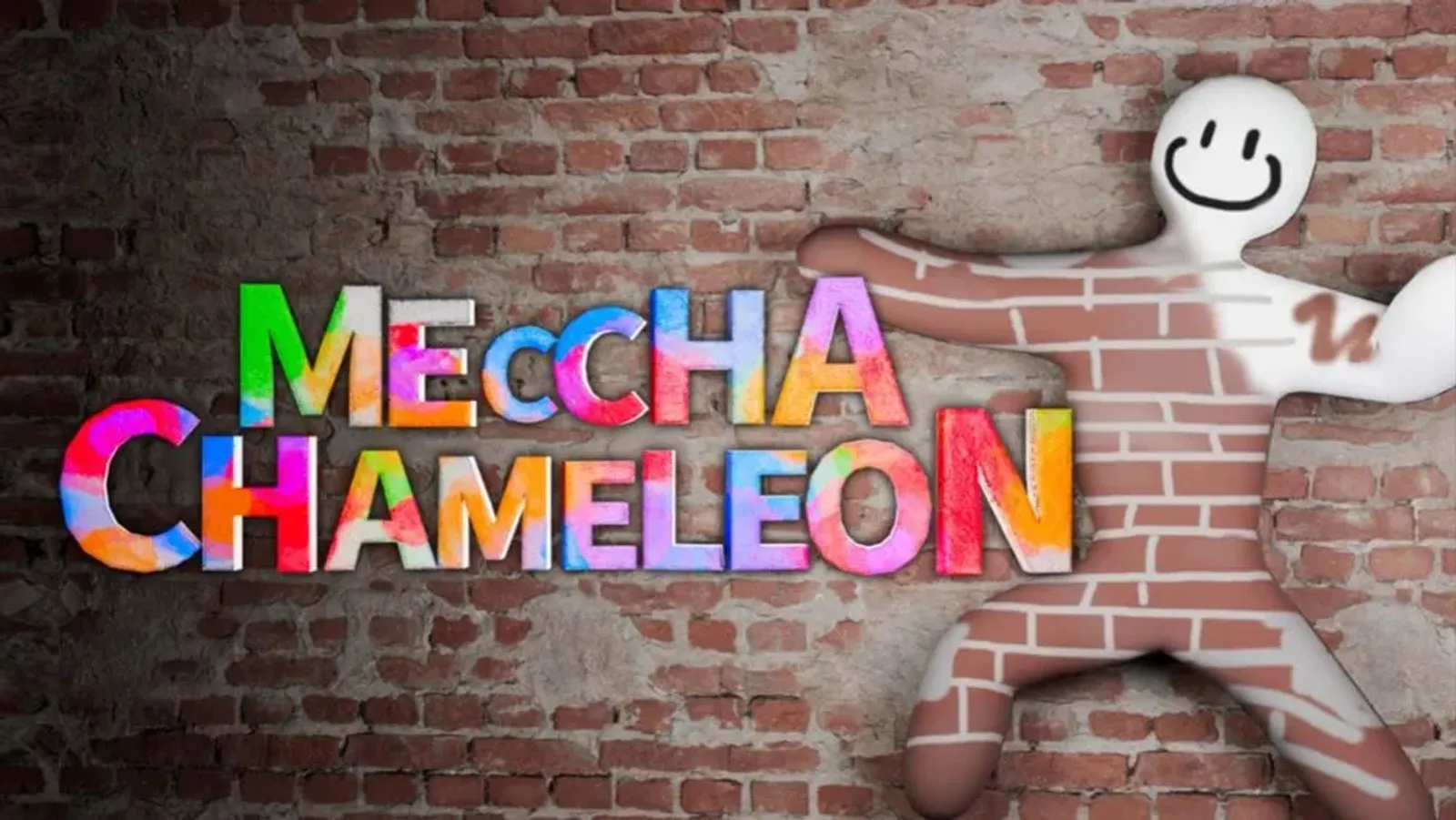
The core idea is easy to understand. A group of players hides inside a stage while a seeker tries to find them. Instead of turning into chairs, boxes, or props, hiders use the mouse to paint their own character with the colors of the surrounding environment. The goal is to blend into walls, floors, signs, furniture, and clutter. It looks like hide-and-seek, but it also feels like a messy, timed camouflage painting test.

Design Highlights
The smartest part of MECCHA CHAMELEON is that camouflage is not just a passive state. It is something players have to make by hand. Traditional Prop Hunt-style games usually ask players to become an object in the scene, so the challenge is mostly about choosing the right position and acting naturally. This game connects position reading with color reading. You first need to find a possible hiding spot, then identify the background colors, then paint yourself well enough before time and pressure catch up.
That design makes failure funny. Players are not only caught because the system exposed them. They are caught because they painted themselves badly, missed the color by a little, left an edge visible, or stood in a corner while looking like an obvious piece of graffiti. The seeker is not just searching for objects either. They are scanning the image for something that feels wrong. That makes the game especially friendly to streaming, because viewers can immediately understand who is hiding well and who has completely failed.
The low barrier also matters. Players do not need to study a complex ruleset. “Paint yourself to look like the background” is enough to start. Within a few minutes, the game can produce jokes, betrayal, shouting, misreads, and chase sequences. Those are exactly the kinds of moments that help a party game travel.

Technical Analysis
From a design perspective, the technical priority of MECCHA CHAMELEON is not high-end visual fidelity. It is readability. The environment needs clear color blocks, materials, and lighting differences so players can judge how to paint themselves. At the same time, character silhouettes cannot disappear completely, because the seeker still needs meaningful visual information to read.
That balance is delicate. If the environment is too clean, hiders have very few believable ways to camouflage themselves. If the environment is too noisy, the seeker is reduced to guessing. A good hiding spot should make the player feel, “This might work,” while still leaving possible tells such as edges, shadow direction, saturation mismatch, or strange brush strokes. The comedy often happens at the exact moment those tells become visible.
The game also understands a key strength of multiplayer design: players create the content. The map can be the same from match to match, but the camouflage, position, timing, mistakes, and reactions keep changing. For short videos and livestreams, that is more valuable than simply adding more systems.
Creative Process
Public information about the development is still mostly limited to the Steam page and media coverage, but the direction of the project is very focused. MECCHA CHAMELEON does not present itself as a large competitive multiplayer platform, and it does not bury the core idea under progression, equipment, or heavy customization systems. Almost everything points back to one behavior that players can understand quickly: paint, hide, get found.
That focus is useful for indie game creators. When the core interaction is clear enough, the game does not need photorealistic visuals or a massive amount of content to become memorable. If players understand the rule in the first minute, create a funny moment by the third minute, and want to invite friends by the tenth minute, the game has a real chance to spread through social play.
Insights & Learning
The success of MECCHA CHAMELEON is a reminder that party games do not always win through content volume. What it sells is an interaction that is easy to understand, easy to imitate, and easy to mess up in public. Failure is not only a punishment. It is part of the entertainment. Getting caught does not simply mean losing the round; it becomes a shared comedic event.
If you are designing a small multiplayer game, this is worth studying from three angles. First, can the rule be explained in one sentence? Second, does failure create drama instead of only frustration? Third, can a viewer who has never played the game still understand the tension on screen? When all three are true, the game becomes much easier to stream, clip, recommend, and share with friends.
Related Works
If you enjoy this kind of hiding and detection design, it is worth looking at Garry's Mod: Prop Hunt, Witch It, Hide and Shriek, and other asymmetric hiding games. Their rules are not identical, but they all turn the difference between “seen” and “not seen” into the main source of fun.
Further reading:
-
MECCHA CHAMELEON on Steam
-
PC Gamer’s coverage of MECCHA CHAMELEON and the current wave of social micro-hits
-
GamesRadar+ report on the game’s sales momentum and rapid spread
Conclusion
MECCHA CHAMELEON is worth watching not only because it sold quickly, but because it repackages hide-and-seek through one extremely simple interaction. By turning camouflage from a button press or prop choice into manual painting, every player action has the potential to become a joke.
It is not the most complex multiplayer game, but it knows exactly what it wants to deliver: fast comprehension, quick rounds, funny failure, and moments that are easy to share. For indie creators, that is a more useful lesson than simply chasing a larger content checklist.