COCOON Game Review: How Warm Colors and Gentle Puzzles Heal Moments of Loneliness
COCOON Game Review: How Warm Colors and Gentle Puzzles Heal Moments of Loneliness
Work Overview
COCOON is a tender yet profound adventure puzzle game developed by Geometric Interactive. There are no high score leaderboards, no time pressure, and no death mechanics. Instead, there’s a quiet story: a small creature awakens from darkness, gradually exploring, connecting, and finally finding where it belongs.
The game’s core promise is beautifully simple: you don’t need to become a hero, just care for the lives around you with sincerity. Small puzzles, warm colors, and gentle music compose a journey that should be lonely yet feels full of togetherness.
What I love most about COCOON is that it understands what “healing” truly means. It’s not hollow comfort, but rather through a story, companionship, and a gradual discovery process, allowing players to naturally feel the meaning of “connection.” After playing through COCOON once, you walk away carrying warmth with you.

Design Highlights
1. Hand-Drawn Art’s Color Healing Power
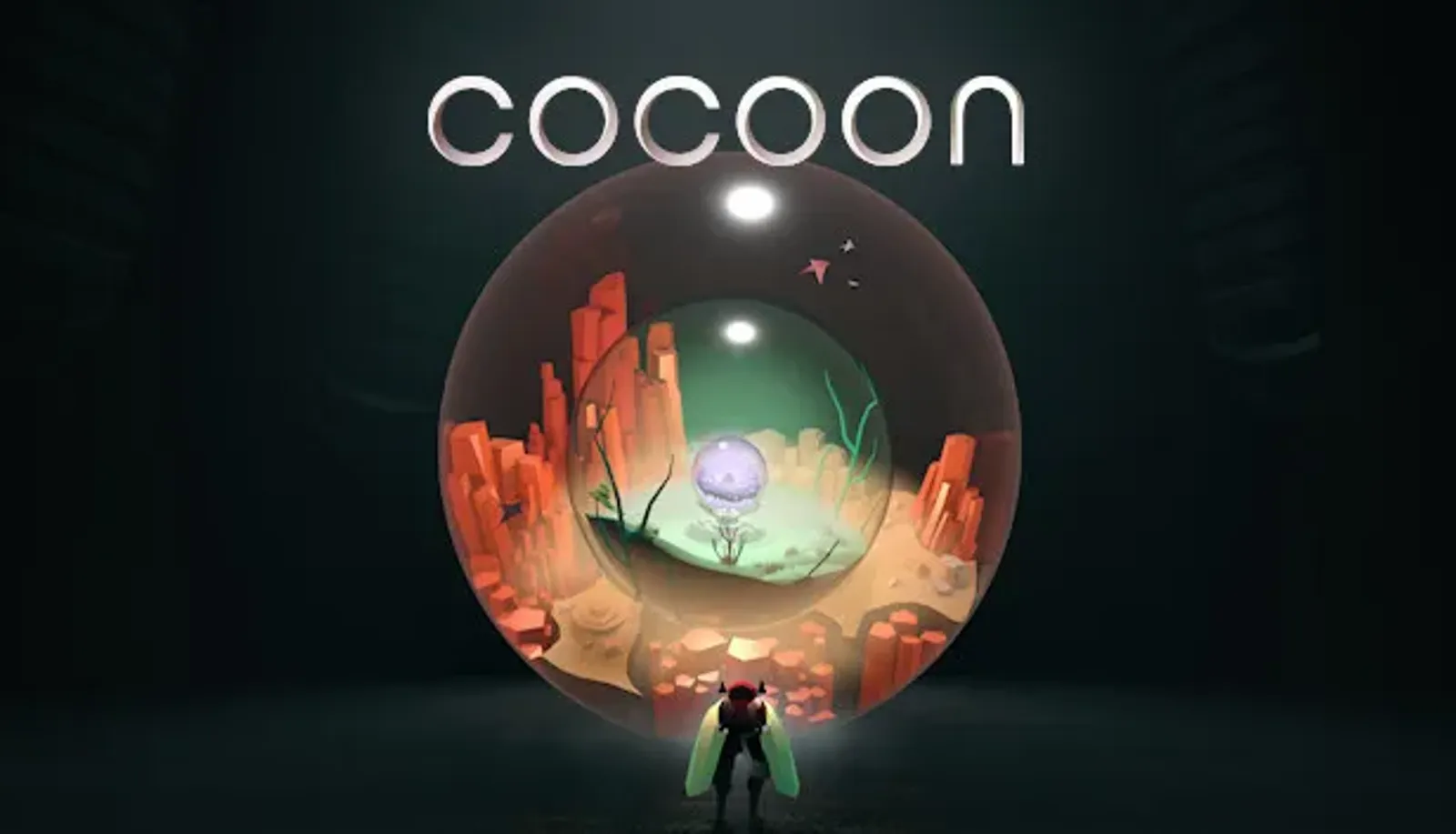
COCOON’s color palette is exceptionally thoughtful. Warm yellows, soft reds, deep blues—each scene’s color temperature conveys emotion. Early cold tones suggest mystery and solitude, while as the story progresses, colors gradually warm until they reach a healing temperature.
This isn’t technical accumulation, but rather the practice of psychological color theory. Players won’t consciously realize they’re being guided by color, yet they’ll naturally sense “I feel safe now.”
For sensitive players who are easily affected by environment, this color layering is particularly important. It’s like a gentle companion, using color to tell you “this place is safe.”
2. Intuitive Puzzles Emphasizing Companionship Over Challenge
Many puzzle games raise difficulty to create achievement. COCOON takes the opposite path: puzzles are designed with kindness, primarily guiding players to understand “what this creature needs.”
You’re not breaking through levels, but learning empathy—understanding another life’s needs, then helping it in the most natural way. Each puzzle breakthrough is accompanied by that warm moment of “I finally understand.”
The brilliance of this design is that new players won’t get frustrated and quit, while experienced players can discover details through deeper observation. The difficulty is calibrated very humanely.
3. Music as Emotional Guide, Not Background Sound
COCOON’s soundtrack is special. It’s not “filling” space, but “speaking.” Every note carries the character’s emotional state.
When the small creature feels lost, the music is hesitant; when it finds companions, the music becomes warm; when the story completes, the music feels like an embrace. The music perfectly synchronizes with visuals and puzzles, forming a complete psychological experience.
For people long immersed in stressful environments, traveling through COCOON’s soundtrack will naturally calm your nerves. This is the most genuine effect of a “healing game.”

Technical Analysis
From a design systems perspective, COCOON exemplifies three principles worth learning.
1. Balance Between Game Length and Emotional Density
COCOON is short—approximately 2-3 hours of playtime. But that’s exactly its strength. If stretched to 10 hours, that warmth would be diluted by fatigue.
High emotional density in short time has more power than prolonged accumulation. The development team understood exactly: sometimes, less is more.
2. The Power of Wordless Storytelling
COCOON has almost no dialogue or subtitles. The story is conveyed entirely through visuals, music, and interaction. This means no cultural or language barriers—players from anywhere can understand this story.
Moreover, whitespace gives players more room to project their emotions. Watching the small creature overcome challenges might remind you of your own loneliness; seeing it reunite with companions might recall your connections with loved ones.
Wordless design isn’t crude—it’s the generosity of design.
3. Interactive Design Reinforcing Theme
In COCOON, every action reinforces the theme of “protection.” When you hold the controller, every movement is gentle: softly pushing, tenderly touching, patiently waiting.
This subtle operational feel subtly guides your psychological state. Ultimately, you’re not just “playing” a game, but experiencing “the feeling of protecting others.”
Insights & Learning
COCOON’s gift to creators is profound. It proves one thing: the most powerful stories often emerge from the simplest designs.
I think there are four lessons we can learn from it.
1. Color as Narrative Tool
Don’t view color as pure decoration, but think about how it conveys your story’s emotional arc. Color temperature, saturation, contrast—all are narrative language.
2. Whitespace Moves Hearts More Than Clutter
In this noisy age, a concise, quiet work becomes particularly precious. Give your audience some imaginative space, and they’ll fill it.
3. Music as Psychological Guidance
A soundtrack isn’t mere decoration—it directly affects your psychological state. Choosing musical language aligned with your story can amplify your design intent.
4. Empathy Design Is Harder Than Difficulty Design
Creating challenge is easy, but designing interactions that trigger empathy requires deep understanding of humanity. This is COCOON’s true technical achievement.

Creative Context
COCOON emerged from an interesting starting point. The development team wanted to create a story “about trust and protection,” but they rejected traditional heroic narratives.
They asked: What if we didn’t need to save the world, just sincerely accompany one life?
This simple question extends throughout the game’s entire design context. Since companionship is the core, there’s no need for high difficulty; since it’s companionship, music should be warm; since it’s companionship, color should convey safety.
Every design decision stems from this initial intention. That’s why COCOON never feels contradictory—all elements serve the same emotional goal.
The Genuine Healing Effect
Let me specifically explain why I believe COCOON is a “genuinely healing game” rather than just comfortable gameplay.
Many games claim to be “healing,” but really just provide a visually comfortable environment. COCOON is different—it actually changes your psychological state.
By the middle of the game, you start thinking: “How should I help this creature survive?” This is fundamentally an empathy shift. You don’t just mindlessly tap, but begin consciously observing, thinking, and communicating.
This psychological state, maintained for 2-3 hours, gradually transforms how you perceive “protection” and “connection.” When you finish the game, you might discover you’ve become more tender.
The game doesn’t heal you. Rather, it teaches you the rhythm of healing.

Recommendations for Different Players
If you find yourself in these situations, COCOON will be especially right for you:
- Feeling lonely or disconnected: The game wraps you in warmth, reminding you connection exists.
- When work or study stress is high: Its pace is slow, no time limits, won’t add anxiety.
- Wanting a “companionship-style” gaming experience: Not pursuing thrills, just wanting a quiet companion.
- Creatives sensitive to art and music: This is an excellent design textbook.
Conversely, if you’re expecting:
- High difficulty challenges
- Complex plot lines and dialogue
- Competitive gameplay
Then COCOON might not be your first choice. This game knows its boundaries clearly.
Closing
In a world constantly pushing us to be “faster, stronger, higher,” COCOON is a gentle resistance.
It tells us: it’s okay to slow down. Sincere companionship matters more than rushing to achieve something. The distant light can be reached slowly.
If you’ve been feeling tired lately, or just want a gaming experience that won’t hurt you, COCOON is a good choice.
As you play, you’ll discover you’ve become softer. That’s the gift this game wants to give you.