Clair Obscur: Expedition 33 — How French Aesthetics Reinvented the Turn-Based RPG
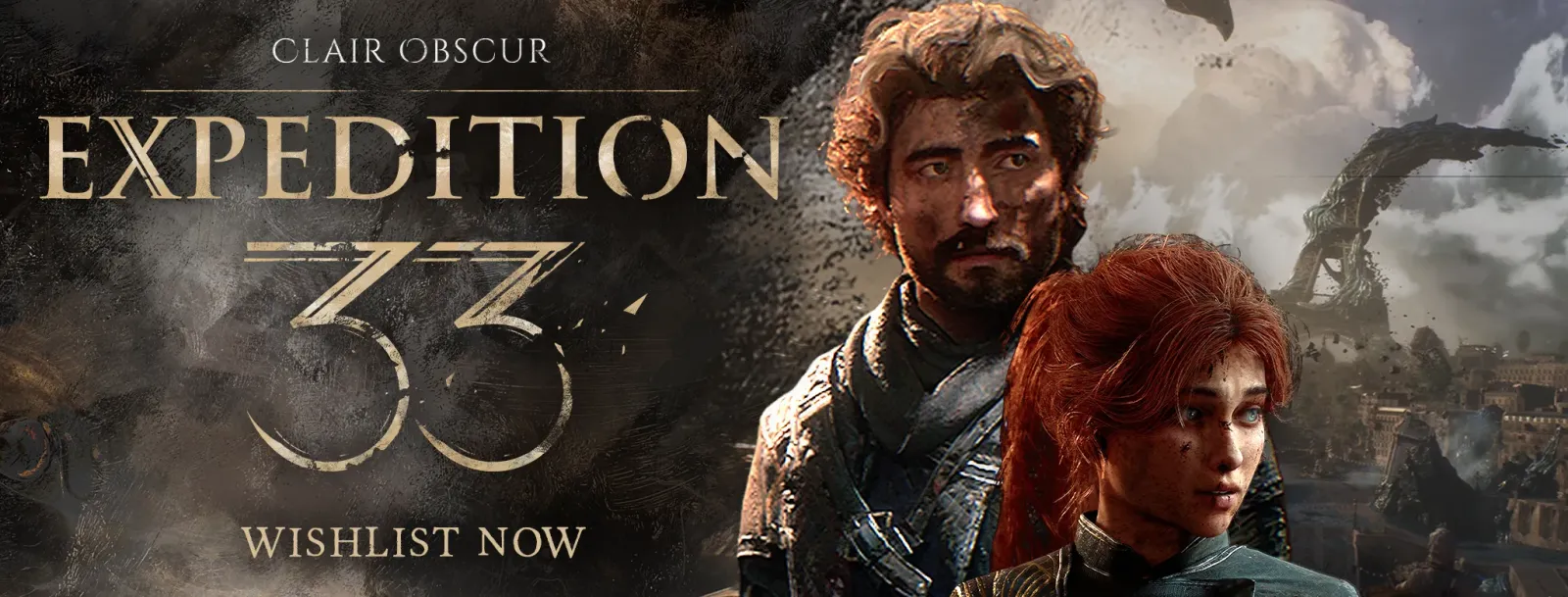
Clair Obscur: Expedition 33 — How French Aesthetics Reinvented the Turn-Based RPG
Overview
Clair Obscur: Expedition 33, developed by Sandfall Interactive in Montpellier, France, swept the 2025 Game Awards with 9 trophies — including Game of the Year and Best Art Direction. For many, this was a surprise. For anyone who spent time studying its visual language, it wasn’t.
Every visual decision in this game is pointing in the same direction. And it does so with extraordinary consistency.
This article focuses purely on the art: what visual language Sandfall chose, why it works, and what small-studio developers can take away from it.

Design Highlights
Belle Époque and Art Nouveau: The Power of Choosing the Right Source
The game’s visual foundation is rooted in France’s Belle Époque — the “Beautiful Era” of the late 19th and early 20th centuries. This wasn’t a purely aesthetic choice; it was a world-building decision.
The game is set in a world under a mysterious curse: every year, a “Paintress” paints a number, and everyone who reaches that age disappears. The emotional core — elegance coexisting with fragility — maps perfectly onto Belle Époque’s historical atmosphere of cultural flourishing shadowed by inevitable collapse.
Art Nouveau’s organic curves, floral motifs, and intricate surface ornamentation appear throughout architecture, props, and UI borders. This language of “natural forms made into artificial decoration” gives the world a kind of refined uncanniness — precisely the emotional frequency the game needs.
Surrealism: Making the World Feel Unsafe
Sandfall didn’t stop at nostalgic beauty. By layering in visual language drawn from Dalí and Magritte, they ensured players can never fully trust the space they’re inhabiting:
- Floating architectural ruins and inverted terrain break conventional spatial logic
- Water reflections distort reality; horizons appear at unexpected angles
- Light sources come from physically impossible directions — but the resulting shadows serve composition rather than physics
This approach sustains a constant undercurrent of unease without allowing the world to feel incoherent. The surrealism is always grounded in one consistent stylistic register.
Combat Cinematography: Making Turn-Based Feel Like Action Cinema
One of the most decisive visual choices in Expedition 33 is the complete reimagining of JRPG battle camera language.
Traditional turn-based games typically use static third-person cameras to frame unit actions. Expedition 33 introduces dynamic editing — each skill has a purpose-built camera cut that operates more like film action choreography than a UI system presentation.
The real-time dodge and parry system is backed by visual feedback that is short, decisive, and non-intrusive — injecting physical tension into the turn-based structure without overwhelming it. Effects design pursues both spectacle and readability: high-power skills get elaborate presentations, but the recipient’s state remains legible at all times. Tactical information never gets swallowed by the fireworks.
Character Design: Period Detail Meets Combat Credibility
The main cast occupies a smart middle ground: period-accurate silhouettes without strict historical reconstruction. 19th-century French tailoring forms the foundation, but functional design details let the characters hold up in combat contexts — they don’t look like people in period costumes attending a battle.
Color assignment carries much of the characterization work:
- Gustave’s warm earth tones signal drive and determination
- Maelle’s cool blue-white palette suggests distance, mystery, and restraint
- Enemy designs draw from classical sculpture and academic painting traditions, making combat feel visually like a clash between living artworks
Technical Analysis
Light as an Emotional Storytelling Tool
The game uses UE5’s Lumen global illumination — but not as a “more realistic lighting” tool. It’s used as an emotional brush.
Each location type has a consistent light-temperature signature:
| Scene Type | Light Characteristics | Emotional Signal |
|---|---|---|
| Main city, safe zones | Warm gold, window-cast stripe shadows, afternoon feel | Relief, warmth, humanity |
| Cursed danger zones | Cold blue bleed, high-contrast shadows, perpetual overcast | Unease, time pressure |
| Climactic sequences | Theatrical backlight, strong rim light on characters | Will, resolve |
Once these rules are established, players can intuitively read danger and emotional register just from light colour temperature — with no text prompt required.
Color Palette as Geographic Memory
Each region of the game has a dominant palette that rarely overlaps with others, creating strong spatial memory:
- Opening city: Off-white, warm orange, brick red
- Forest regions: Blue-green gradients, hints of silver mist
- Mid-game danger zones: Dominant purple-grey, punctuated with high-saturation warning accents
- Late-game core areas: Approaching blown-out white, sudden saturation drop aligned with narrative turning points
The overall drift toward desaturation across the game arc also maps onto the world’s life force — the closer you get to the curse’s center, the more the color bleeds away toward grey-white. Art becomes narrative instrument.
UI Design: The Highest Level of Invisible
The game’s greatest UI achievement is that it almost disappears — despite carrying substantial information density. The key methods:
- During NPC dialogue, UI elements are minimized; the frame belongs to character expression
- Battle UI positioning and animation timing are calibrated to avoid disrupting dynamic camera cuts
- Skill menu backgrounds use translucent material treatment, blending into the world rather than sitting on top of it
Crucially, Art Nouveau ornamental detail also appears in UI frame elements, making the interface an extension of the visual identity rather than a separate HUD layer. Players are operating the interface and looking at art simultaneously.

Behind the Aesthetic
A Small Studio’s Large-Scale Art Strategy
Sandfall Interactive is a comparatively lean studio, but Expedition 33’s visual density far exceeds what comparably-sized teams typically produce. Their approach can be broken down into a few core strategies:
Choose source material that is already rich Both Belle Époque and French Surrealism come with enormous archives of historical reference images. They offer an effectively unlimited inspiration pool with clear stylistic boundaries — allowing the team to build a unified visual language efficiently, rather than constructing a wholly invented aesthetic system from scratch.
Use UE5 as a force multiplier Lumen and Nanite allow cinematic-quality lighting results with significantly less manual iteration time. This let Sandfall concentrate limited human resources on concept art and scene composition, rather than endless baking and manual light source calibration.
Consistency over complexity The game makes no attempt to incorporate multiple distinct art styles. Every visual decision operates within the same framework of “French decadence and elegance in decline” — enabling efficient asset reuse while maintaining consistent tonal register throughout.
How Art Reinforces Core Theme
The game’s premise centers on an all-powerful entity whose drawn numbers determine death. This concept provides a meaningful anchor for the entire art system:
- World surfaces extensively use materials and light treatments that evoke the texture of paint and canvas — placing players inside a painting
- Select high-stakes sequences apply a post-processing filter that makes brushwork visible, reinforcing the feeling that these existences were drawn into being
- Color saturation decline tracks deteriorating life force, making visual aesthetics carry direct narrative weight
The depth of integration between art direction and narrative theme is the hardest thing about Expedition 33 to replicate. Its images don’t just look good — they mean something.
Takeaways for Creators
The most valuable lesson Expedition 33 offers indie creators isn’t the “French style” — it’s the systems thinking behind its art direction:
Every visual decision has a clear priority order: narrative → emotion → style → technology. It doesn’t chase the highest pixel count or pile on the most effects. It pursues a single goal: every frame says the same thing.
That consistency is how a small studio with limited resources builds a visual identity that competes with any budget.
Great art direction isn’t about having everything. It’s about every element knowing exactly why it belongs there.
Expedition 33 achieves this — without compromise.
Related Resources:
-
Sandfall Interactive Official Site
- Developer behind Clair Obscur: Expedition 33
-
Clair Obscur: Expedition 33 on Steam
- Game page with screenshots and trailers
-
Art Nouveau Network
- Visual reference for Art Nouveau style and historical context
-
UE5 Lumen Documentation
- Technical reference for the global illumination system used in the game
Tags: #VisualDesign #GameArt #RPG #IndieGame #FrenchGame #UE5 #ColorDesign