Anno 1800 Game and Art Overview: What Makes Its Industrial City-Building So Compelling?
Anno 1800 Game and Art Overview: What Makes Its Industrial City-Building So Compelling?
Work Overview
Developed by Ubisoft Mainz, Anno 1800 is a city-building and economic strategy game set in the industrial era. The player’s role is not just to place buildings, but to connect citizen needs, production chains, shipping logistics, and diplomacy into a sustainable urban system.
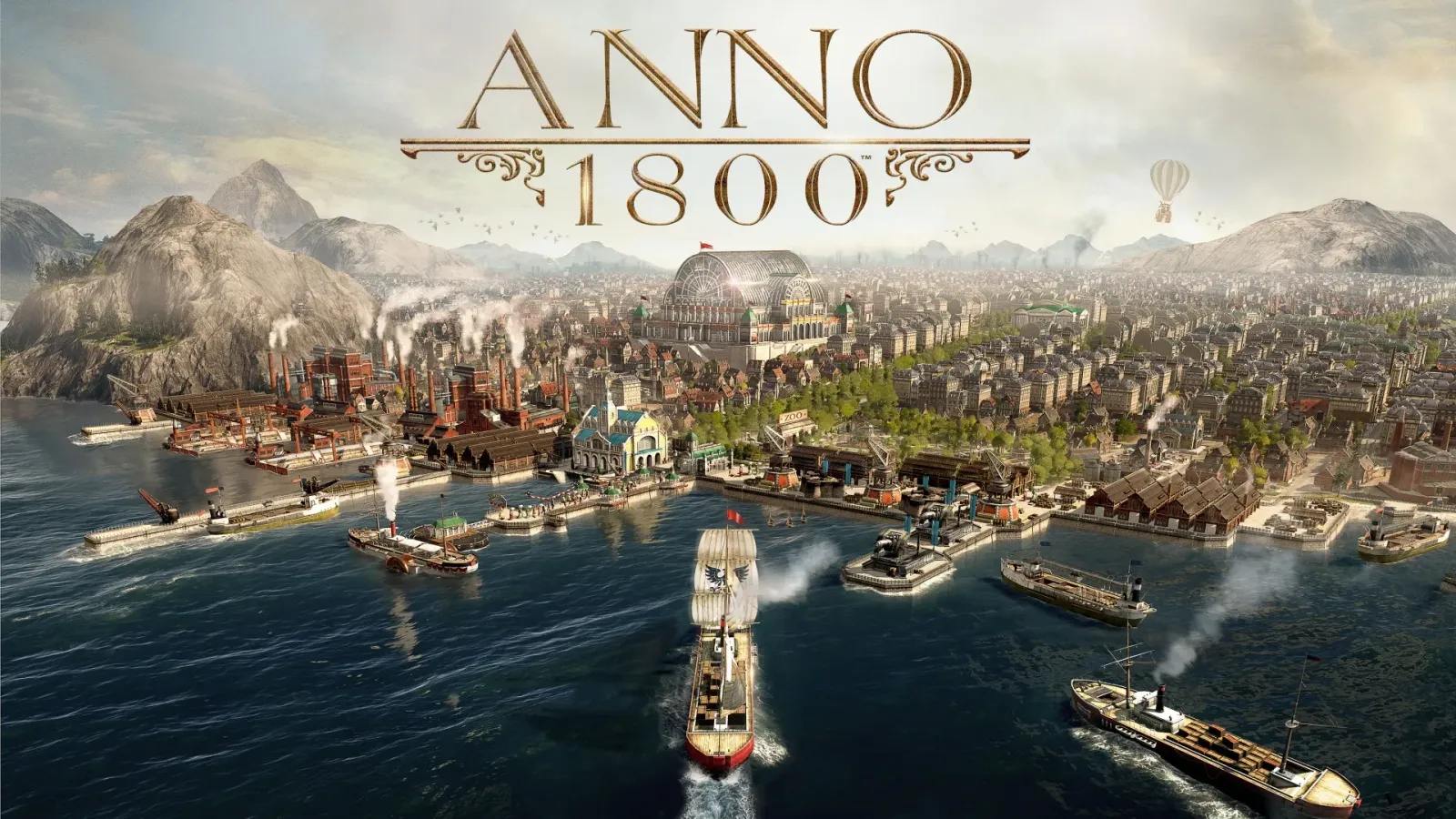
What makes the game stand out is how strategy and visual design reinforce each other. As your systems become more efficient, the city visibly transforms, creating both operational satisfaction and artistic immersion.
Design Highlights
The first major highlight is visualized progress. When you fix bottlenecks and optimize production, you do not only see better numbers—you see a more complete city: stronger districts, busier ports, and clearer urban rhythm.
The second highlight is era coherence. Red-brick factories, steam-driven infrastructure, dense harbors, and classical residential blocks together create a distinct industrial identity with strong readability.
The third highlight is district-level visual logic. Industrial zones feel dense and mechanical, residential zones feel ordered and stable, and harbor zones provide motion-focused visual anchors. Even from a top-down perspective, players can quickly read city status.

Technical Analysis
Its core loop can be simplified into four stages:
- Build basic production chains for citizen needs
- Upgrade population tiers to unlock advanced industries
- Expand islands and trade routes to resolve resource gaps
- Continuously optimize cost, space, and throughput
The game’s depth comes from chain reactions. A small change in one production line can affect power demand, storage pressure, harbor flow, and citizen satisfaction. This systemic coupling is why the game remains engaging over long sessions.
UI design also plays a key role. Despite high information density, players can quickly identify shortages, locate bottlenecks, and choose whether to increase production, adjust logistics, or rebalance trade.
Creative Process
From a practical player workflow, most sessions follow four phases:
- Establish a stable basic economy
- Build the first reliable supply chain
- Expand into multi-island logistics
- Return for long-term optimization
A common beginner mistake is expanding too fast. A more stable approach is to secure core needs first, then scale into advanced production and larger logistics networks. This “stability before speed” rhythm reduces rework and collapse risk.
Insights & Learning
Anno 1800 offers valuable lessons beyond strategy gameplay:
- Complex systems still need high readability
- Art direction should support decision-making, not just decoration
- A stable operational baseline should come before heavy visual polish
These principles are useful for game prototyping, 3D environment planning, and UI/UX design in management games.

Related Works
If you enjoy the mix of systems and visual immersion in Anno 1800, you may also explore:
- Anno 2205: Future-era contrast within the same franchise
- Cities: Skylines: Infrastructure and traffic-focused city readability
- Frostpunk: High-pressure survival governance with strong atmospheric direction
Conclusion
Anno 1800 is a mature example of strategy systems, visual storytelling, and interface readability working as one design package. Its long-term appeal comes not only from depth, but from how clearly it lets players read, manage, and improve their cities.
If you enjoy growth-driven strategy with strong urban aesthetics, this title remains one of the best modern references.
Related Resources:
-
Anno 1800 Official Page
- Game overview and edition details
-
Anno Union
- Official community and development updates
-
Ubisoft Help: Anno 1800
- Support and troubleshooting
Tags: #Anno1800 #CityBuilding #StrategyGame #ArtAnalysis #IndustrialEra #collection