Sea of Stars Visual Design Analysis: Modern Pixel Art with Classic JRPG Soul
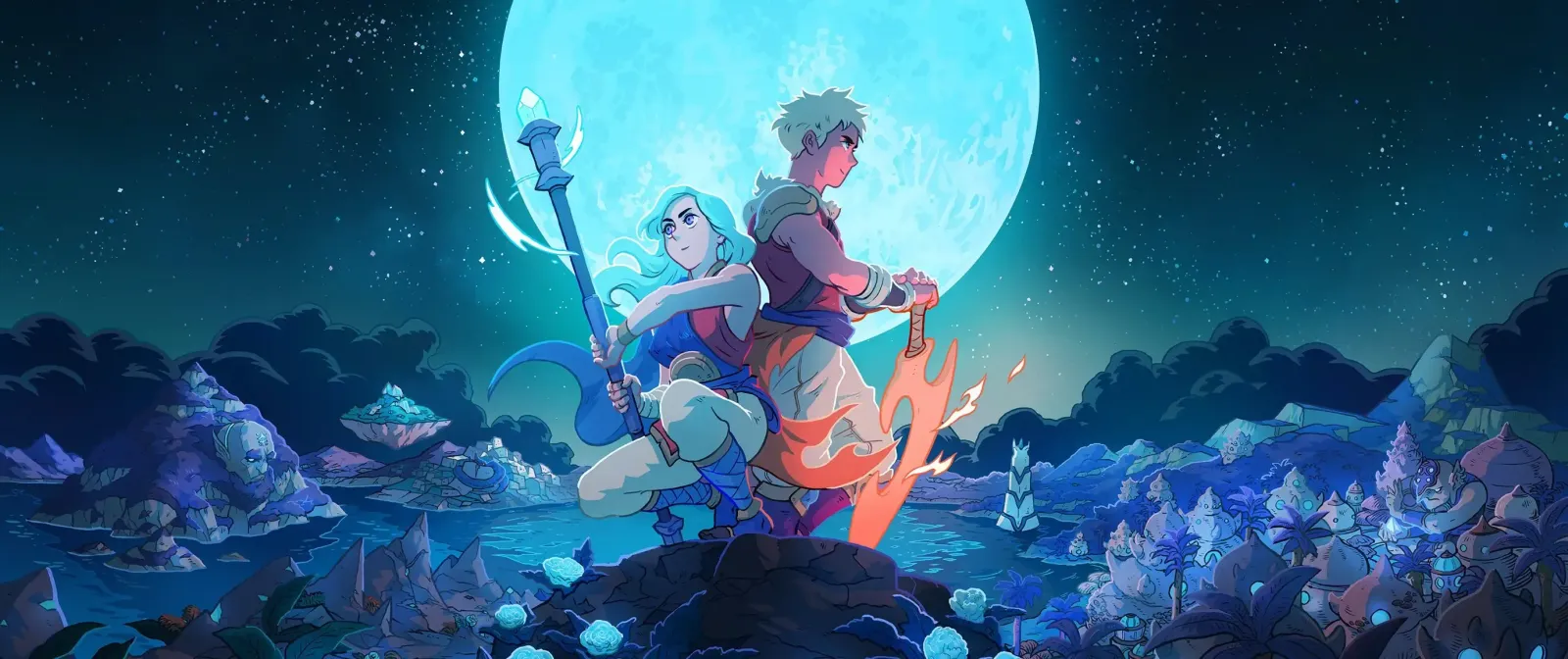
Sea of Stars Visual Design Analysis: Modern Pixel Art with Classic JRPG Soul
Work Overview
Sea of Stars is one of the clearest examples of how contemporary indie teams can revive classic JRPG visual language without becoming trapped in nostalgia. Developed by Sabotage Studio, the game borrows the readability and charm of 16-bit era adventure RPGs, then expands that foundation with modern lighting behavior, richer environmental motion, and cinematic framing choices.
Many retro-inspired projects try to imitate a specific old console output. Sea of Stars takes a different path. Its goal is not hardware simulation. Its goal is emotional memory: making players feel the spirit of classic adventure while delivering visual quality that aligns with today’s expectations for pacing, atmosphere, and feedback.
This distinction matters. The game is not visually memorable because it has pixel art. It is memorable because every visual system supports the same player experience loop: wonder while exploring, clarity while fighting, and mood continuity while following the story.
From world traversal to menu interactions, Sea of Stars demonstrates that good visual design is not an isolated art pass. It is a full-stack communication system where color, motion, depth, contrast, and interface hierarchy work as one.

Design Highlights
Retro Foundation, Modern Atmosphere
At first glance, Sea of Stars is rooted in familiar retro grammar: tile-based environments, readable silhouettes, top-down traversal scenes, and side-facing combat staging. These choices immediately establish genre identity.
The innovation appears in how those foundations are layered:
- Dynamic-feeling light transitions across day and night mood
- Environmental shimmer, glow, and reflective surfaces that feel alive
- Story moments framed with stronger visual composition than many classic RPGs
Instead of breaking retro language, these layers reinforce it. The result is visual continuity with older RPG traditions while still feeling unmistakably modern.
Color Script as Emotional Pacing
Sea of Stars uses palette management as narrative rhythm. The game avoids random color diversity and instead applies intentional emotional progression:
- Warm golden skies for optimism, discovery, and forward momentum
- Cool moonlit environments for mystery and introspection
- High-intensity accents for magical events and combat peaks
Because this color script is coherent across regions, the world feels connected. Biomes still look distinct, but transitions never feel abrupt. This is an advanced art-direction decision that many smaller projects overlook.
Shape Language and Readability Discipline
The game’s visual identity is also built on shape discipline. Characters, props, and architecture rely on clear silhouette categories:
- Rounded, friendly shapes in safe exploration spaces
- Sharper and denser forms around danger zones and enemy pressure
- Stable geometry in social hubs to reduce visual stress
This gives players subconscious orientation support. Before reading text or mechanics, they already sense whether a space invites curiosity or caution.
Technical Analysis
Environment Layering and Depth Design
One of Sea of Stars’ strongest achievements is world depth. Many pixel games look flat because all elements compete on the same visual plane. Here, depth is staged carefully:
- Foreground details frame movement lanes and guide attention
- Midground keeps gameplay-critical information readable
- Background gradients and parallax create travel scale
This layered approach turns map traversal into a visual journey rather than a sequence of disconnected rooms.
Water, Sky, and Light Integration
Water and sky are repeated signature motifs. In pixel art, these systems often become noisy because reflections, highlights, and gradients can overpower tile readability. Sea of Stars solves this through restraint:
- Reflections are visible but controlled in contrast
- Shoreline highlights add motion without visual clutter
- Sky gradients reinforce time-of-day mood without flattening character silhouettes
These technical decisions create atmosphere while protecting gameplay clarity.
Combat Effects and Timing Feedback
Sea of Stars includes active timing interactions in turn-based combat. Visual feedback must therefore be attractive and instructional at the same time. The game delivers this through:
- Clear anticipation frames before major enemy and player actions
- Distinct impact flashes for successful timed input
- Effect duration tuned to avoid masking the next decision window
This is a key production lesson: effects are strongest when they help players make faster, better decisions.
Animation Economy and Personality
The animation system balances expressiveness with performance-conscious economy. Characters are not overloaded with unnecessary motion loops. Instead, they receive targeted animation detail where it matters most:
- Combat startup and recovery timing
- Emotional gestures in narrative beats
- Context-specific idle behaviors in exploration scenes
This selective detail strategy prevents animation fatigue and keeps key moments memorable.

Creative Process
Cohesive Direction Over Feature Accumulation
Sea of Stars feels cohesive because its production choices prioritize direction consistency over novelty stacking. Instead of adding visual features just because they are technically possible, the art pipeline appears to follow a filter:
- Does this improve readability?
- Does this reinforce emotional tone?
- Does this fit the established visual language?
If the answer is weak on any point, the feature likely stays minimal.
This approach protects quality. In production, many teams lose visual identity when every discipline adds independent “cool ideas.” Sea of Stars demonstrates the opposite: a single visual thesis applied across environment, character effects, and UI.
Pixel Workflow with Modern Expectations
A practical challenge in modern pixel production is expectation mismatch. Players now expect richer motion, smoother transitions, and cinematic readability even in retro-styled games.
Sea of Stars resolves this by blending classic sprite logic with contemporary presentation tactics:
- Richer atmospheric transitions around exploration routes
- Layered post-processing feel while preserving pixel integrity
- Combat camera emphasis without sacrificing tactical readability
This is likely one of the biggest reasons the game reaches both retro fans and newer RPG audiences.
UX as an Art-Direction Component
The UI does not feel detached from the world. Typography treatment, icon proportions, spacing rhythm, and contrast hierarchy all align with the game’s visual tone.
Practical strengths include:
- Core battle information remains immediately readable
- Secondary data stays accessible without dominating the scene
- Consistent icon and frame language reduces cognitive friction
For production teams, this is a critical reminder: interface design is part of visual worldbuilding, not a separate technical layer.
Insights & Learning
Why This Art Direction Works
Sea of Stars succeeds because it is built on aligned priorities rather than isolated visual tricks:
- Nostalgic structure provides instant genre familiarity
- Modern atmosphere increases emotional immersion
- Readability discipline preserves gameplay clarity
- Consistent visual hierarchy reduces player fatigue
Many projects fail by choosing one extreme: either strict retro imitation or effect-heavy modernization. Sea of Stars finds sustainable middle ground.
Transferable Lessons for Indie Teams
If your team is building a pixel-style RPG or adventure game, these lessons are practical:
- Define readability rules before creating effects.
- Use light and gradient systems to support navigation and mood.
- Keep animation timing tightly linked to player input feedback.
- Build a global color script for biome transitions and narrative pacing.
- Treat UI hierarchy as core to visual identity and player trust.
- Prefer consistency over constant novelty in asset production.
These principles scale well even for small teams with limited budgets. Strong direction often outperforms high-cost rendering complexity.
Common Mistakes This Game Avoids
Sea of Stars is also valuable as a reference for what not to do:
- It avoids oversaturated effect stacking that hurts readability.
- It avoids static retro flatness by introducing controlled depth.
- It avoids noisy interfaces that compete with world art.
- It avoids disconnected biome palettes that break narrative flow.
Studying these avoided pitfalls can be as useful as studying successful techniques.
Related Works
If you enjoy Sea of Stars’ balance between retro structure and modern visual polish, these titles are useful comparisons:
- Chrono Trigger: foundational JRPG pacing and iconic readability principles
- Chained Echoes: modern indie reinterpretation of classic turn-based visual clarity
- Octopath Traveler: HD-2D depth treatment with stronger cinematic lighting separation
Comparing these works helps clarify one key point: there is no single “correct” modern pixel style. The best direction depends on how well visual choices serve the intended gameplay and emotional cadence.
Conclusion
Sea of Stars proves that pixel art does not need to choose between nostalgia and contemporary quality. With disciplined art direction, coherent technical execution, and gameplay-aware visual feedback, retro-inspired games can feel both timeless and current.
For players, that means an adventure world that is readable, expressive, and emotionally consistent.
For developers, it is a production case study in how to modernize classic JRPG aesthetics without losing identity.
Related Resources:
Tags: #gamedesign #visualdesign #pixelart #indiegames #seaofstars #jrpg