Carto Visual Design Analysis: A Warm Adventure Through Map Puzzles
Work Overview
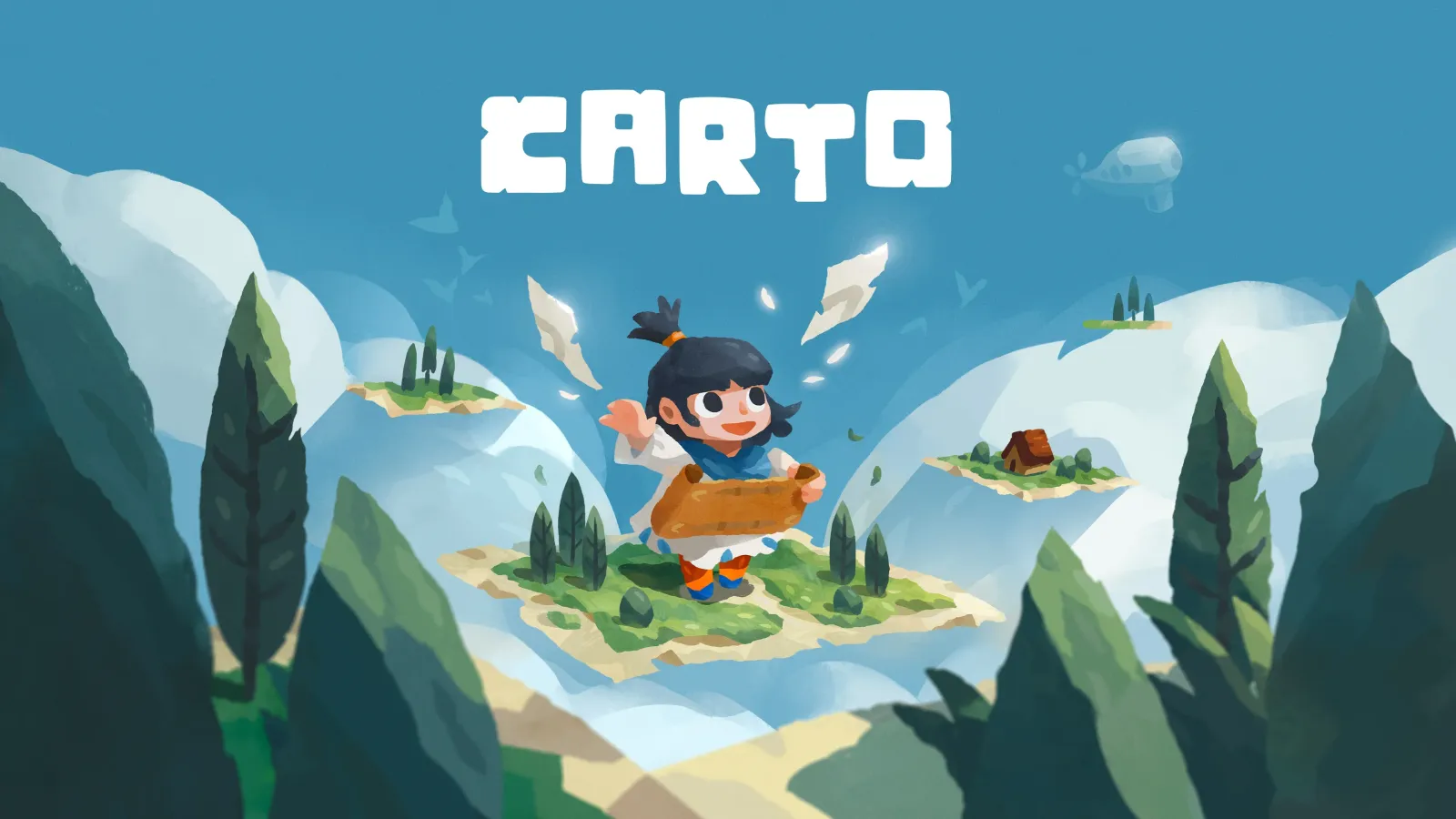
Carto is a puzzle adventure game released by Sunhead Games in 2020. Players control Carto, a young girl separated from her grandmother, who must rearrange map puzzle pieces to change the world and find her way home. With its warm hand-drawn style, innovative map mechanics, and heartwarming narrative, the game received critical acclaim in the indie gaming community and won multiple international awards.
Core feature: The map is the puzzle. Players don’t just explore the world—they can rotate and connect map tiles, causing actual terrain changes, opening new paths, and triggering events. This “meta-game” design perfectly fuses puzzle mechanics with visual presentation.
Design Highlights
1. Hand-Drawn Style Approachability
Paper Texture: The entire game world feels like a hand-drawn picture book. Map tiles have paper grain texture, characters and objects feature hand-drawn lines, creating a warm, friendly storybook atmosphere.
Color Philosophy:
- Forest Areas: Soft greens and browns conveying natural tranquility
- Desert Areas: Warm orange-yellow tones full of vitality
- Snowy Areas: Fresh blue-white palette, pure and dreamlike
- Ocean Areas: Bright cyan-green, lively and hopeful
Each region has a distinct color theme for instant recognition while maintaining overall visual harmony.

2. Visual Feedback of Map Piecing
Real-time Changes: When players rotate or move map tiles, the world reorganizes instantly—trees, rivers, buildings connect seamlessly. This visual magic reinforces the feeling of “you’re changing the world.”
Edge Design: Map tile edges use dotted lines or blank spaces to suggest “pieceable,” without breaking overall aesthetics. When tiles connect correctly, edges disappear to form a complete picture, providing visual rewards.
UI Integration: The map interface itself resembles an open atlas. Piecing animations are smooth and natural without mechanical stiffness, maintaining immersion.
3. Character & Animation Minimalist Charm
Minimal Design: Carto and NPCs are simplified cartoon forms without complex details, yet through vibrant colors, exaggerated proportions, rich expressions, they convey vivid personalities.
Animation Language:
- Light bouncing while walking conveys childlike curiosity
- Surprised jumps when discovering puzzles enhance achievement
- Nodding and gesturing during NPC dialogue adds warmth
Animation frames are limited, but each movement is carefully designed to match the game’s relaxed atmosphere.
4. Environmental Storytelling Subtlety
Every scene tells a story:
- Forest cabins with fishing rods by the door hint at residents’ lifestyle
- Desert village windmills and cacti showcase local culture
- Footprints in snow guide exploration direction
These details need no text explanation—visual elements alone bring the world to life.
Technical Analysis
Tools Used
- Unity Engine: 2D game development
- Hand-drawn Assets: Created in Photoshop/Procreate, preserving brush stroke texture
- Animation: Unity Animator with hand-drawn frame animation
Visual Technical Features
Layered Design: Maps consist of multiple layers (terrain, decoration, characters), allowing precise alignment during piecing while maintaining visual richness.
Light & Shadow: Though 2D, soft shadows and highlight accents create depth. Tree bases have subtle shadows preventing flatness.
Color Management: Overall low saturation, high brightness palette avoids visual fatigue, comfortable for extended play.

Creative Process
Design Philosophy
The development team wanted to create a game without failure or time pressure, letting players purely enjoy exploration and discovery. The hand-drawn storybook visual style was chosen to convey this warm, safe, imaginative atmosphere.
Visual Challenges of Map Mechanics
How to make players intuitively understand “maps can be pieced”? The team’s solution:
- Dashed Borders: Suggest tiles are movable
- Tutorial Levels: Use visual guides (flashing, arrows) to teach mechanics
- Sound Design: “Click” sound when successful piecing reinforces visual feedback
Color Emotion Design
Each region’s colors underwent emotion testing:
- Forest (Green): Tutorial area, calm and friendly
- Desert (Orange): Adventure escalates, warm but not oppressive
- Snow (Blue): Challenge increases, cool tones provide thinking space
- Final Chapter (Multicolor): Emotional climax, rich colors symbolize reunion and hope

Insights & Learning
For Game Designers
Perfect Fusion of Mechanics & Art: Carto’s map piecing isn’t just gameplay—it’s part of the visual language. When mechanics themselves are artistic expression, the game experience becomes more cohesive.
Constraints Spark Creativity: 2D hand-drawn style seems simple, but through carefully designed colors, animations, and details, it creates a rich world. You don’t need AAA technology—stylized art creates unique memorable moments.
For Illustrators
Power of Consistency: Every scene and character in Carto follows the same line weight, color saturation, and texture treatment. This consistency makes the world believable.
Wisdom of Negative Space: Hand-drawn style doesn’t need to fill every pixel. Appropriate negative space (map edges, sky) makes compositions breathable and highlights focal points.
For Puzzle Game Enthusiasts
Visuals as Clues: Many of Carto’s puzzles hide in plain sight. Observing terrain colors, object placement, NPC positions often reveals solutions. Training visual observation skills is key to solving the game.

Related Works
Similar Style Games:
- A Short Hike: Same hand-drawn warmth, emphasizing exploration joy
- Dorfromantik: Similar piecing mechanics, equally therapeutic visuals
- Unpacking: Minimalist art, excellent environmental storytelling
Recommended for players who enjoy:
- Therapeutic visual styles
- Stress-free puzzle experiences
- Innovative game mechanics
- Warm narrative atmosphere
Conclusion
Carto proves that minimalist doesn’t mean simple. Through the perfect combination of hand-drawn style, thoughtful color palettes, smooth animation, and innovative mechanics, the game creates a world both warm and imaginative.
For creators, Carto’s lesson is: visual design should serve core experience. Map piecing mechanics need clear visual feedback, hence paper texture; the game emphasizes exploration over combat, hence soft colors rather than conflict-heavy palettes. Every design decision points to one goal: letting players feel the warmth of adventure and joy of discovery.
This is the charm of indie games—creating infinite possibilities with limited resources.
Related Resources:
- Carto Official Website - Game introduction and developer interviews
- Steam Page - Player reviews and community discussion
- [2021 TGDF] Carto Development Journey - Developer talk on game creation process
Tags:#GameDesign #VisualArt #IndieGame #PuzzleGame #HandDrawnStyle #Carto