Gris Visual Analysis: How Watercolor Painted the Shape of Grief
Gris Visual Analysis: How Watercolor Painted the Shape of Grief
Work Overview
In 2018, Barcelona-based indie studio Nomada Studio released Gris.
This wasn’t a traditional game—no dialogue, no text, no death penalty.
You simply accompany a girl who has lost her voice through a gradually crumbling world.
And then you watch as color slowly returns.
Conrad Roset (illustrator), Roger Mendoza, and Adrián Cuevas (former Ubisoft employees) founded the studio and spent two and a half years turning watercolor illustrations into an interactive experience.
Entirely hand-painted watercolor backgrounds, minimalist platforming puzzles, piano compositions by Spanish ensemble Berlinist.
Winner of the 2019 Game Developers Choice Award for “Best Visual Art,” Annie Award for “Character Animation in a Video Game,” and The Game Awards “Games for Impact.”
This is a visual poem about grief.
Design Highlights
Color as Narrative: The Healing Journey from Gray to Full Spectrum
The game opens in pure grayscale. The protagonist Gris (Spanish for “gray”) stands in the palm of a crumbling statue, trying to sing but unable to make a sound.
Then she starts walking.
Each chapter restores one color: Red → Green → Blue → Yellow, finally merging into a complete spectrum.

This isn’t spectacle—it’s because color is emotion itself:
- Gray: loss, emptiness, silence
- Red: anger, struggle, denial (one of the five stages of grief)
- Green: acceptance, calm, renewal of life
- Blue: settling, deep emotional release
- Yellow: hope, rebirth, acceptance
The development team consulted a psychologist to ensure each color corresponded to real psychological stages of grief and healing.
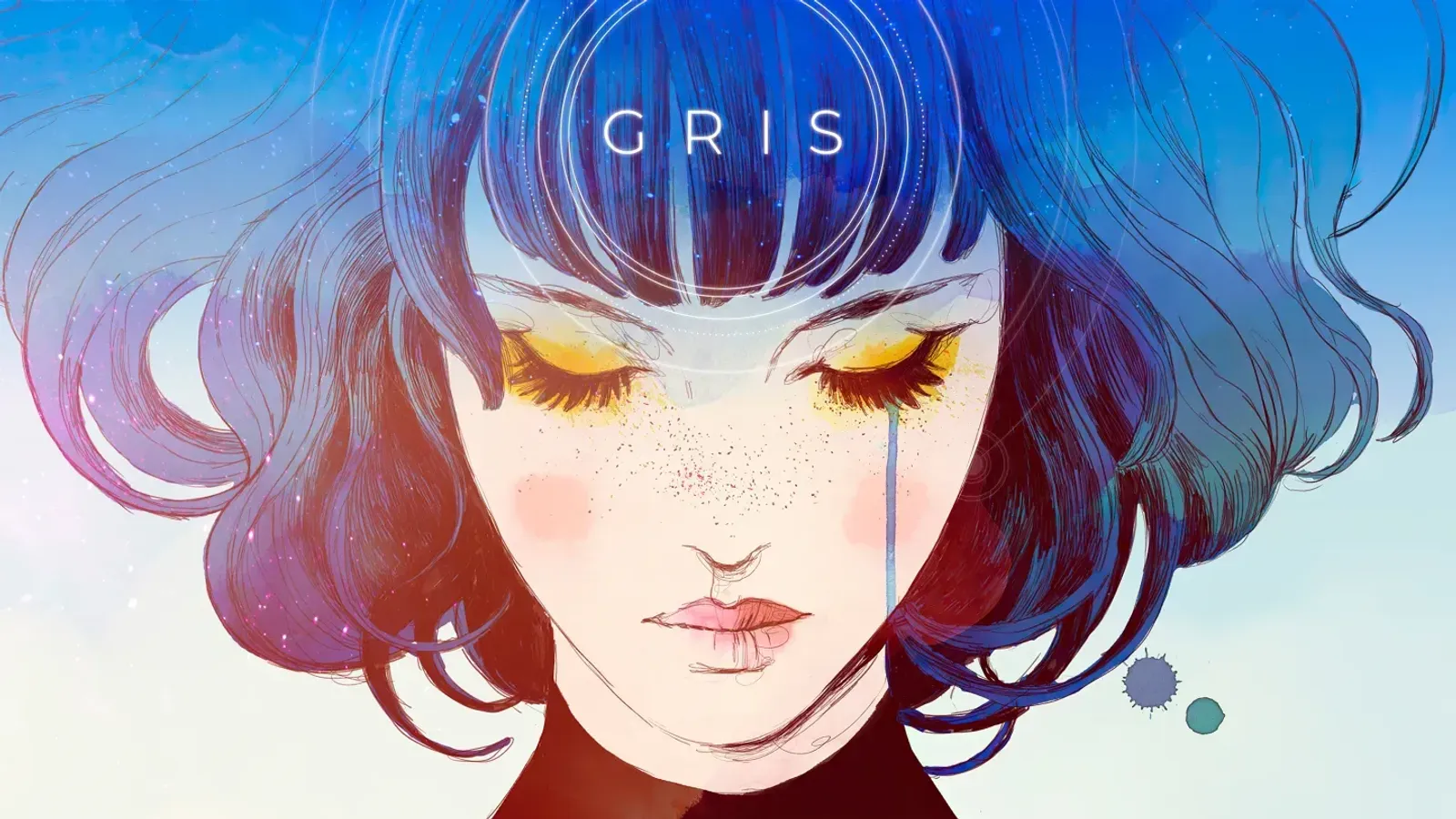
The Softness and Fragility of Hand-Painted Watercolor
All backgrounds are hand-painted watercolors scanned and digitized.
Conrad Roset said: “We didn’t want perfection—we wanted real brushstrokes and bleeding.”
The characteristics of watercolor—soft edges, flowing colors, impossible to fully control—perfectly mirror Gris’s inner state: fragile, fluid, impossible to grasp.
Technically integrated with Unity engine, but each scene was first painted on paper, then scanned in layers with dynamic elements added (wind-blown leaves, falling petals, water ripples).
The art team referenced Japanese Iwagumi-style aquascaping, using “minimalist but layered” design to keep grayscale scenes from being monotonous.

Minimalist Design and No-Fail Mechanic
Gris has no Game Over.
You can’t die, can’t lose, don’t need to restart. Because this isn’t testing your gaming skills—it’s accompanying you through emotions.
This design was challenging: how to maintain engagement without punishment?
Solutions:
- Ability unlocks: Gris gradually learns to become heavy (break obstacles), double jump, swim, sing
- Environmental interaction: collect starlight, activate constellations, awaken dormant creatures
- Visual rewards: each progression brings aesthetic upgrades to the visuals
The game lasts about 3-4 hours, intentionally designed for “one sitting experience,” like watching an emotional film.
Perfect Harmony of Music and Visuals
Berlinist’s soundtrack is the third protagonist.
Piano, strings, ambient sound—no lyrics, but every note speaks.
The most moving moment is when Gris regains her voice: the background music merges with her singing, the screen bursts with light, player input and narrative achieve perfect resonance.
This is the unique power of interactive media: you personally helped her find her voice.

Technical Analysis
Core Technology:
- Unity engine + hand-painted watercolor layering
- Dynamic particle systems (petals, dust, light points)
- Procedurally generated constellation paths
- Precise camera choreography design (referencing cinematic language)
Development Challenges:
- How to maintain player motivation with no-fail mechanics?
- How to convey complex emotions through pure visual storytelling?
- How to balance artistic vision with gameplay?
Roger Mendoza said: “We want players to solve puzzles on the second or third try—no frustration, just the joy of discovery.”
Development Cycle: 2.5 years, starting with a core team of 3
Sales: Surpassed 3 million copies by 2024 (only 100K in the first week)
Creative Process
The three founders met at a Ubisoft employee farewell party.
Conrad Roset was curious about game development; Roger and Adrián wanted to make indie games but lacked art skills—so Nomada Studio was born.
Inspired by Journey and Ori and the Blind Forest, they wanted to create something more intimate and emotional.
Conrad said: “I wanted to make a game my mother could play. She can’t play action games, but she can understand emotion.”
The name Gris is both the Spanish word for “gray,” the protagonist’s name, and the starting point of the entire narrative.
The team faced financial pressure multiple times during development but refused to compromise on art quality, ultimately reversing sales through word of mouth.
Three Insights
1. Less Is More
No dialogue, no tutorial prompts—players discover themselves. Restraint is power.
2. Emotion Is Gameplay
Interaction isn’t just button presses; it’s guiding players through an emotional journey. The core of healing games is accompaniment.
3. Art Style Is Differentiation
Gris’s watercolor style made it stand out among thousands of indie games. Find your visual language and stick with it.
For indie creators: don’t fear being “too artistic” or “too niche”. Sincere emotion always finds an audience.
Small teams’ advantage is doing experiments big companies won’t dare. Focus on your strengths; don’t try to please everyone.
Personal Perspective
Why does Gris move us so deeply?
Because it gave grief a shape.
While most games teach you to “overcome” difficulties, Gris simply accompanies you through them. No victory condition, only the process of acceptance.
Watercolor bleeding like tears, the crumbling world like the emptiness after losing someone, gradually returning colors like time slowly mending wounds.
This isn’t explaining—it’s letting you feel. That’s where interactive art is most powerful—you’re not an audience, but a participant.
For creators: don’t fear making works “without clear gameplay.” Sometimes, the experience itself is the purpose.
Gris proved: games can be poetry, can be paintings, can be conversations without words.
While AAA games chase “bigger, flashier, longer,” this 3-hour vignette, in the gentlest way, said the deepest things.
Conclusion
Gris is a love letter to grief and proof of interactive art’s possibilities.
It shows us: games don’t need combat, don’t need challenges, don’t need dialogue—as long as there’s sincere emotion, it can touch hearts.
For all creators in their dark moments: your grief deserves to be seen, your story deserves to be told.
Sometimes the most healing thing isn’t conquering darkness—it’s allowing yourself to slowly walk back into the light.
Related Resources:
- Gris Steam Page - Official game page
- Nomada Studio Official Site - Developer’s official website
- Official Trailer - Launch Trailer
- Original Soundtrack - Complete score by Berlinist
- GDC 2019 Developer Talk - Deep dive into creative philosophy
Tags: #Gris #WatercolorArt #GameArt #VisualStorytelling #IndieGames #HealingGames