Nine Sols Visual Design Analysis: Where Eastern Mythology Meets Cyberpunk Aesthetics
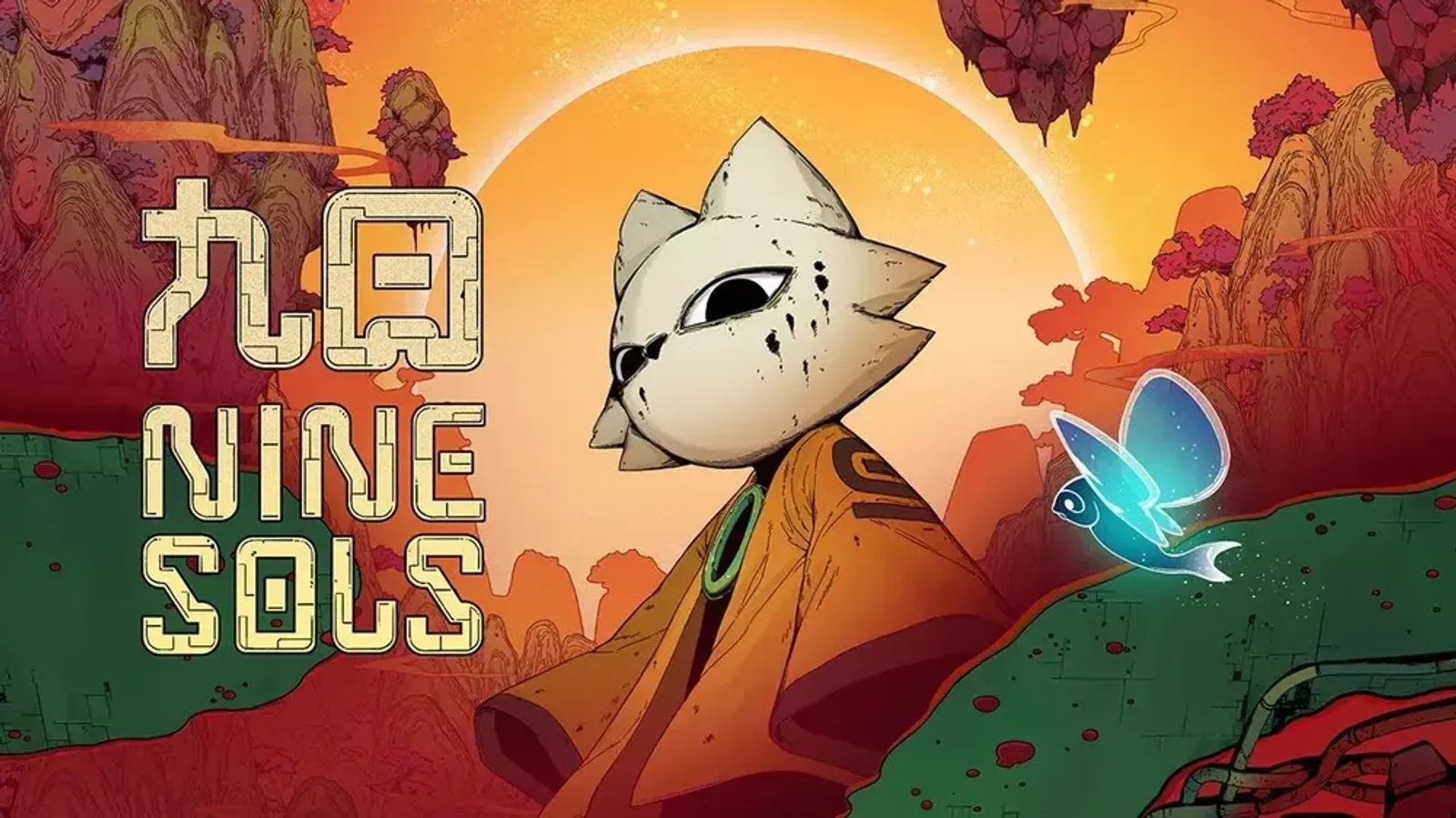
Nine Sols Visual Design Analysis: Where Eastern Mythology Meets Cyberpunk Aesthetics
Work Overview
After Detention and Devotion, Taiwan’s Red Candle Games released the side-scrolling action game Nine Sols in 2024.
This time, they moved away from horror stories and instead fused Taoist mythology, cyberpunk, and martial arts elements to create a work with an extremely unique visual style.
After launch, the game received not only player acclaim but also widespread discussion in design circles.
Why would a 2D side-scroller attract so much attention?
Because every detail is executed to perfection.
Design Highlights
Character Design Refinement
Balance of Lines and Details
Nine Sols character design achieves a magical balance.
Lines are clean and sharp—from a distance, you can clearly identify character silhouettes and actions. But zoom in, and you discover details in clothing, equipment, even fur textures.
This is difficult to achieve in 2D games—too simplified loses texture, too complex creates visual noise during fast action.
Modern Transformation of Eastern Elements
The protagonist “Yi” and other “Sols” designs incorporate:
- Taoist symbols (Bagua, Yin-Yang)
- Traditional clothing structures
- Tech prosthetics and mechanical devices
- Animal characteristics (feline, avian, etc.)
Not forced insertion of elements, but reinterpretation. You can see the team did extensive cultural research and design iteration.
Fluidity of Motion Design
Enter the game, and you’ll be stunned by the motion fluidity.
Every attack, dodge, and jump is designed with precision and elegance. Not just “moves,” but has rhythm and weight.
Key frames are clear, in-betweens smooth, impact solid.
This quality is usually only seen in AAA studio games or animated films, but Nine Sols achieved it at indie game scale.
Technical Breakthrough in Scene Art
Perfect Blend of 2D and 3D
This is what amazes me most about Nine Sols.
Careful observation reveals that characters are 2D hand-drawn animation, but scene backgrounds appear to be 3D modeled and processed into 2D style.
This hybrid technique brings several advantages:
Dramatically Improved Production Efficiency
3D modeling scenes is much faster than hand-painting. Quick adjustments to composition, trying different angles and proportions become easy.
Richer Parallax Effects
As characters move, foreground, midground, and background move at different speeds, creating authentic depth. This multi-layered parallax is easy to set up in 3D scenes.
Better Consistency
The same scene under different conditions (day/night, different weather) only requires adjusting lighting parameters, no need to repaint.
But most impressive—you can’t tell it’s 3D at all.
The game looks exactly like pure 2D. No rotating cameras common in 3D games, no real-time calculated dynamic lighting.
The overall visual maintains the flat, hand-drawn texture with zero dissonance. This requires extensive post-processing, stylized shaders, and extremely high art direction unity.
The team chose 3D for scene building not to show off, but to improve production efficiency while maintaining 2D hand-drawn artistic style.
Color and Atmosphere Control
Each area has a distinct color palette and mood:
- Cool blue-green tech zones
- Warm yellow-orange traditional architecture
- Eerie purple-red corrupted spaces
Color isn’t just aesthetic—it tells the story. You can sense a location’s atmosphere and backstory just from the scene.
UI Design Integration
Nine Sols’ UI design is also noteworthy.
Not just information display, but integrated into the worldview.
Taoist Symbolic Interface
Health bars, skill cooldowns, map icons all carry Eastern symbolic aesthetics while maintaining clarity and readability.
Minimal but Detailed
Only necessary info shown during combat, not obstructing the screen. Rich decorative details when opening menus.
Dynamic Feedback
UI elements aren’t static—they breathe and respond to player actions.
Technical Analysis
2D Animation Production Workflow
Though the official workflow hasn’t been fully disclosed, we can infer from the results:
Character Animation
- Concept design and character setup
- Key frame illustration (hand-drawn or digital)
- In-between frame animation
- Dynamic adjustment and polishing
- Integration into game engine
Each major character likely has hundreds of animation frames. The workload is staggering.
Scene Production (speculated)
- 3D scene modeling (possibly Blender or similar)
- Lighting and material setup
- Render to 2D layers
- Hand-drawn stylization (Shader or post-processing)
- Layered import to game engine
This hybrid workflow requires tight collaboration between art and technical teams.
Possible Tools Used
Based on industry practice, likely using:
2D Animation
- Spine or DragonBones (skeletal animation)
- Or traditional frame-by-frame (more labor but higher quality)
- Photoshop / Clip Studio Paint (illustration)
3D Scenes
- Blender (open-source and powerful)
- Unity or other engine built-in tools
Integration
- Unity game engine (very likely based on technical presentation)
- Custom Shader for stylization
Creative Process
Style Formation Exploration
From Red Candle’s previous works, we can see they’ve been exploring “visual language of Taiwanese culture.”
Detention and Devotion focused on Taiwanese history and folk horror, with realistic and somber styles.
Nine Sols boldly breaks out, abstracting and symbolizing Eastern elements while combining with sci-fi futurism.
This transformation requires tremendous courage.
Because done poorly, it becomes “Chinese sci-fi” stereotypes, but Nine Sols found its own visual language.
Team Professionalism
From the refinement of the finished product, we can see:
Animators’ Deep Expertise
Not just technical—requires understanding of motion principles, weight, rhythm. This takes years to accumulate.
Art Director’s Taste
Overall style unified, no dissonance. Requires a strong art director overseeing every detail.
Technical Art Innovation
2D+3D hybrid isn’t new, but achieving this level is rare. Requires technical artists developing specialized tools and workflows.
Insights & Learning
Inspiration for Designers
1. Cultural Elements Can Be Modern
Don’t fear using traditional elements—the key is transformation.
Nine Sols proves Eastern aesthetics and tech futurism can perfectly fuse. Not simple collage of “period costume + neon lights,” but fusion at symbolic, structural, and atmospheric levels.
2. Technology Serves Art
Nine Sols uses much technology, but you don’t feel “tech showing off.”
Technology is the means; the goal is presenting the best visual experience. Use 3D when needed, hand-draw when needed—not constrained by form.
3. Details Determine Quality
Smooth motion, unified color palette, cohesive UI—every detail polished.
This “craftsmanship spirit” elevates work from “good” to “excellent.”
Significance for Taiwanese Creators
Milestone for Taiwanese Game Art
Nine Sols proves Taiwanese teams can achieve world-class visual quality.
Not just technically—more importantly, finding their own voice.
Not imitating Japanese, American, or European styles, but starting from their own culture to create unique visual language.
Industry Confidence Boost
This is a huge morale boost for Taiwan’s entire game industry.
Proves you don’t need big studio resources—with talent, passion, and craftsmanship, you can create work that amazes the world.
More importantly, commerce and art can coexist.
Nine Sols isn’t a niche art game—it’s a critically and commercially successful work. This gives other creators confidence.
Personal Perspective
Why Does Nine Sols’ Art Move People?
I’ve thought long about why Nine Sols fascinates me so much.
Not just beautiful—it has soul.
You can feel the team’s care for every character, every scene. This isn’t outsourced or assembly-line work—it’s crafted by passionate creators.
Every motion detail designed with such precision—sounds simple, but how hard is it to achieve?
Requires animators adjusting frame by frame, art directors confirming repeatedly, entire team committed to quality.
Lines clear but not lacking detail, motion fluid—perfect balance of technique and art.
Too simplified loses texture, too complex affects readability. Finding this balance requires experience and taste.
Spring for Taiwanese Art?
Nine Sols’ success makes me feel—Taiwanese art can finally shine bright.
We’ve always felt Taiwan couldn’t produce world-class visual works, or could only imitate Japanese or American styles.
But Nine Sols proves:
- We have sufficient technical capability
- We have unique cultural heritage
- We have innovative design thinking
More importantly, international markets recognize this style.
Nine Sols is hugely popular on Steam, with foreign players marveling at its visual design. This shows Eastern aesthetics have universal appeal—not just Asian players appreciate it.
More Than a Game—Cultural Export
Nine Sols’ significance transcends the game itself.
It demonstrates how Taiwan presents its culture to the world in a contemporary way.
Not traditional, museum-style cultural display, but integrated into contemporary context as art everyone can appreciate.
This is true cultural export.
Conclusion
Nine Sols is not just a game—it’s a milestone for Taiwanese game art.
Technically:
Demonstrates the ultimate quality 2D animation can achieve, and innovative application of 2D+3D hybrid techniques.
Artistically:
Found the perfect balance between Eastern aesthetics and modern design, creating unique visual language.
Industry Significance:
Proves Taiwanese teams can create world-class works, bringing confidence to the entire industry.
If you’re a designer, animator, or any visual creator, I strongly recommend experiencing Nine Sols yourself.
Not just playing the game, but sensing every design decision, every motion detail, every color choice behind it.
This is the best visual design lesson.
Related Resources:
- Nine Sols Steam Page - Official game page and promotional materials
- Red Candle Games Official Site - Development team official website
- Gameplay Videos - Watch actual gameplay footage
- Red Candle Games Twitter - Development behind-the-scenes and updates
Tags: #GameArt #NineSols #CharacterDesign #2DAnimation #TaiwanGames